
Commission debate over Shouse Professional Services contract ends with termination motion failing
Get AI-powered insights, summaries, and transcripts
Subscribe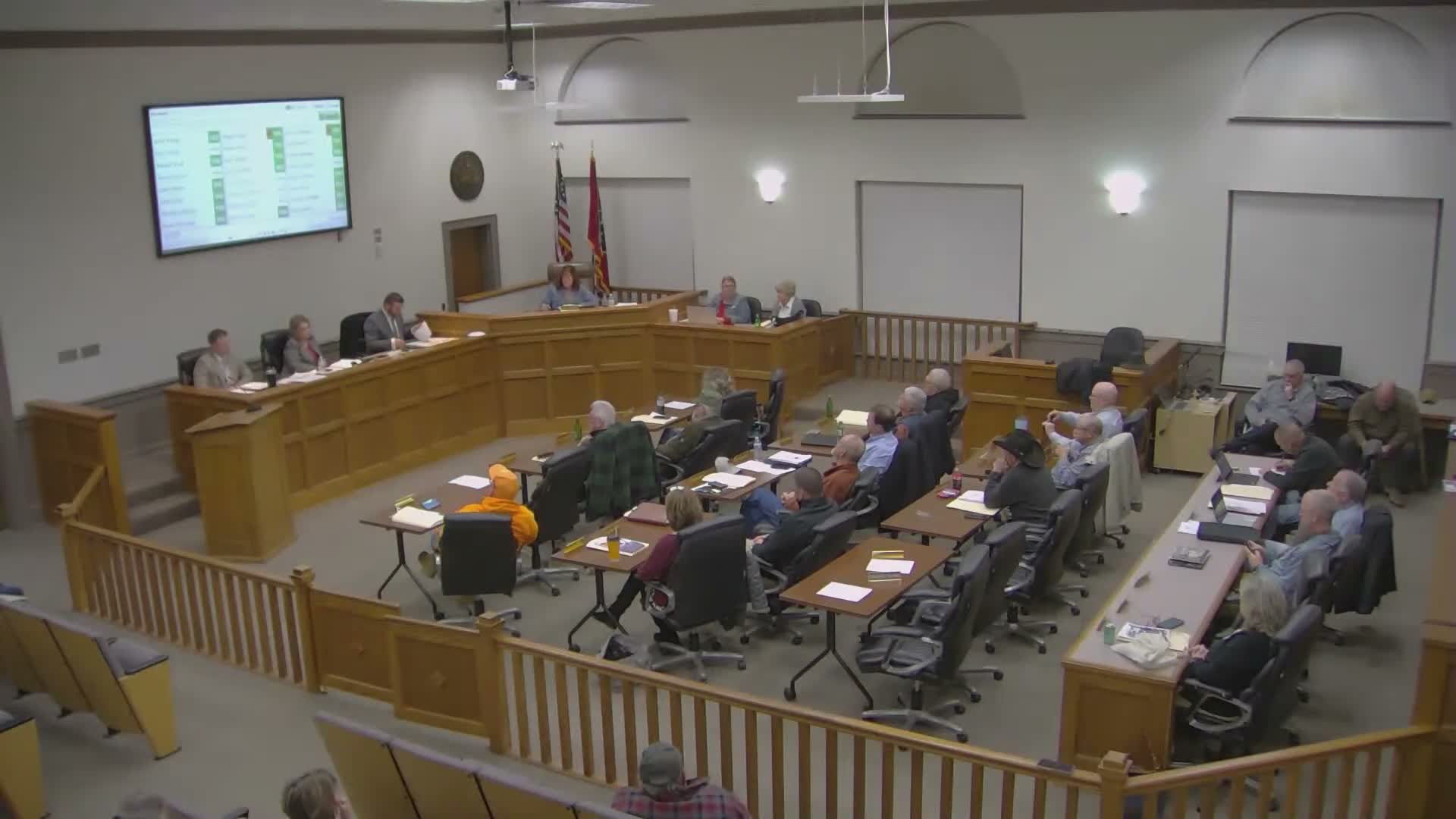
Summary
Commissioners debated terminating Shouse Professional Services' disaster‑recovery contract amid concerns about fees, invoices and FEMA documentation; proponents argued replacing the contractor could save tens of thousands monthly, while opponents warned losing expertise could jeopardize FEMA reimbursements — the motion to terminate failed.
Carter County commissioners on Jan. 25 considered a motion to terminate their contract with Shouse Professional Services, the county's disaster‑recovery contractor; after extended discussion the motion failed.
Commissioner (mover) told the board the county has continued paying Shouse at about $50,000–$60,000 per month and moved to terminate the contract with 30 days’ notice and solicit another firm to support the highway department’s bridge projects. "We still have them on for $50,000 a month," the mover said, arguing that the county should explore alternatives that might save taxpayer dollars.
Opponents — including county staff and several commissioners — warned that terminating Shouse now could endanger the continuity of documentation and field expertise that support FEMA reimbursement and impede ongoing projects. One commissioner who researched the firm said, "Everything that I've found... the only time that they've ever had any bad recommendations... was when they came to Carter County." Other staff cautioned that some mitigation and debris projects have not been fully obligated by FEMA and that losing contractor expertise could create problems answering FEMA requests for information.
During the debate, county staff and commissioners exchanged detailed questions about what work Shouse has performed, how much reimbursement has arrived, and which projects remain in the pipeline. Attorney Harden confirmed the contract allows a minimum of 30 days' notice for termination; commissioners discussed whether a longer notice period should be required, noting the contractor could give 30 days’ notice as well.
A motion to terminate the contract was seconded and discussed; following rollcall-style discussion the chair announced the motion failed without the required support. Commissioners asked staff to prepare options for maintaining continuity of obligations and to assess whether county staff could absorb tasks if the contract were ended.
The meeting did not produce a contractual termination; the county will continue work with Shouse while staff assesses next steps and the commission considers alternatives.