
Council discusses OCFA costs, shelter spending and approaches to public safety and homelessness
Get AI-powered insights, summaries, and transcripts
Subscribe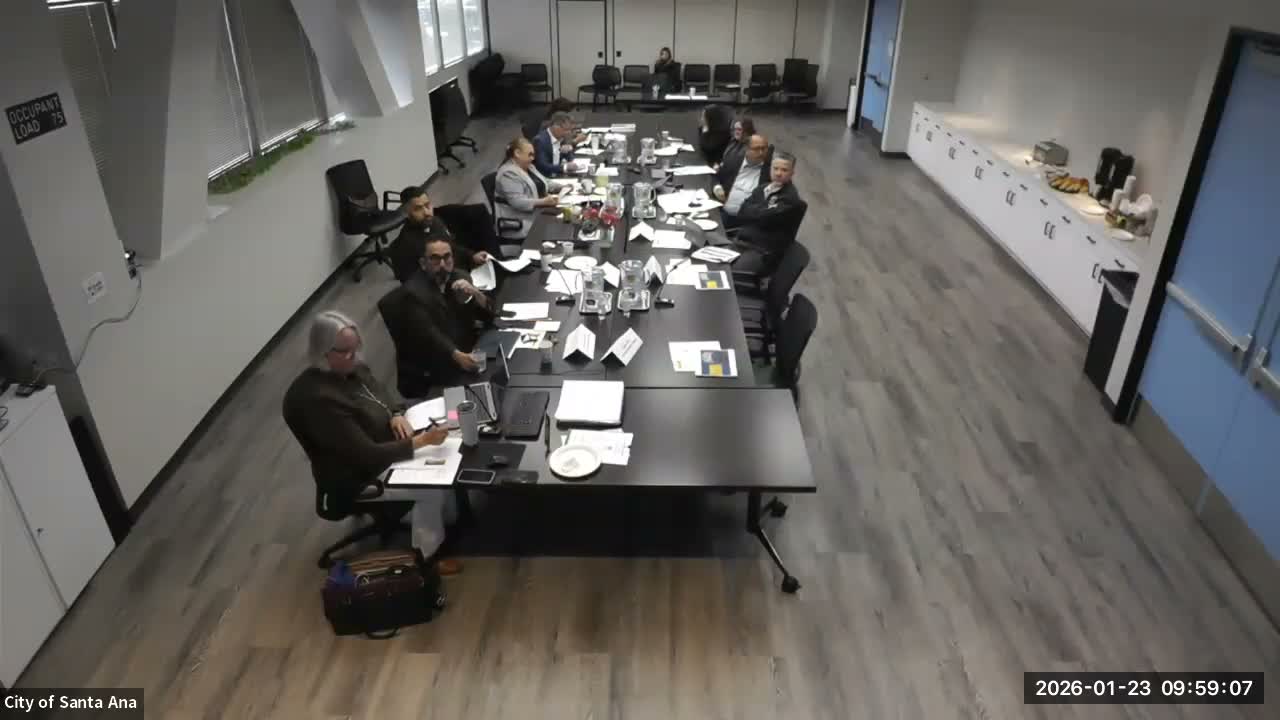
Summary
Council members pressed staff for data on OCFA contracts, potential paramedic costs, shelter outcomes and how restricted state and county funds affect services. Staff committed to a deep dive on expenses, outcomes and coordination with county shelters.
Santa Ana council members used a Jan. 23 workshop to press staff for clearer accounting of public‑safety and homelessness spending and for options to improve service delivery without compromising safety.
Staff told the council that OCFA’s current cash‑contract payment is approximately $53,000,000 and accounts for about 13% of the general fund, with an annual escalation of roughly 4.5% and an automatic JPA renewal through June 30, 2030. The finance presenter also noted OCFA recently indicated rising call volumes and the possible need for a dedicated paramedic unit at an estimated $2.5 million.
Council members asked for a deep dive into the costs and benefits of the city’s current arrangement with OCFA, with Mayor Mesquah and others requesting a report on service levels, historical comparisons and whether the city is receiving expected operational value. Deputy Chief Chuck Alves outlined patrol and hiring metrics: about 22–23 candidates are in background checks and 6–7 recruits are in the academy, while roughly 31 sworn positions were listed as vacancies during the discussion.
On homelessness, staff said the city currently manages roughly $32,000,000 in restricted in‑house services funding (slides cited) and that about $12.6 million is in a restricted fund tied to state allocations for shelter‑related activities. The mayor and several council members asked for more outcome metrics—how many people leave streets for housing, length of shelter stays, and comparative analysis of the county’s 125 beds the city expects to access. Staff said quarterly reports from contracted providers and the city’s website contain service counts but agreed to provide a more detailed, regularly updated accounting.
Council also debated non‑police responses and 'force‑multiplier' technologies to free officers for community engagement. The deputy chief described technology such as drone responses and other tools that can reduce officer dispatch for certain calls. Multiple council members emphasized realistic workforce plans—projects that require more community presence should align with available staffing and hiring timelines.
What comes next: staff will provide a detailed report on OCFA costs and contract terms, a performance and outcomes briefing on shelter and outreach programs, and updated hiring and academy timelines for police staffing before the next budget discussions.