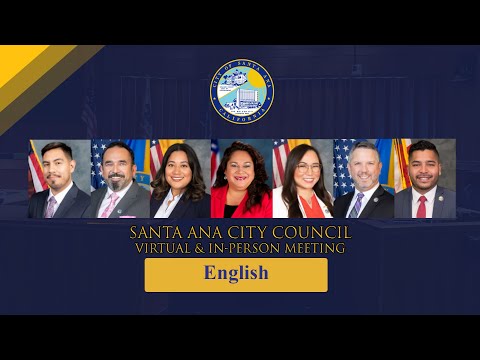
Santa Ana council debates changes to Police Oversight Commission; no vote taken
Loading...
Summary
Residents and advocacy groups urged the Santa Ana City Council to retain investigatory powers for the Police Oversight Commission while staff and several councilmembers weighed a hybrid audit/investigatory model and resource constraints. Council asked staff to return with options in about three months; no formal vote occurred.
At a special meeting focused solely on a proposed revision to the Police Oversight Commission ordinance, the Santa Ana City Council heard hours of public comment Monday night from residents, advocacy groups and the oversight director before directing staff to return with options in roughly three months.
Dozens of speakers — including members of Community Service Organization and other local groups — urged the council not to strip the commission of its authority to investigate alleged police misconduct. “We need to keep the power to independently investigate police violence,” said Emma Godfrey, a Ward 4 resident and CSO member, arguing the July draft was written without adequate community input. Several speakers named officers they said were involved in recent lethal encounters and asked the council to preserve subpoena and disciplinary-recommendation authority.
The staff presentation, led by Independent Oversight Director Jack Morris, framed three broad options: retain the current investigatory model, move to a pattern-and-practice (audit) model, or adopt a hybrid combining focused investigations for the most serious incidents with broader audits. Morris told the council that a recent state law change (referred to in the presentation as AB 847 and changes to Penal Code section 832.7) clarifies that civilian oversight bodies can access certain confidential personnel records for oversight investigations — but that those records must remain confidential and are not automatically public.
Morris also gave a practical briefing on resources: a routine complaint investigation can cost in the “about $15,000” range, complex probes can exceed $40,000, and the oversight office budget is roughly $125,000 annually, which he said would average out to “about 3 complex investigations per year” without additional staff or funding. He cited a DOJ Cleveland case study to illustrate how pattern-and-practice reviews can produce policy and training reforms that reduce use-of-force incidents over time.
Councilmembers voiced differing priorities. Several, including Councilmember Pham, said they supported a hybrid model that preserves the commission’s ability to investigate serious use-of-force incidents while using audits to address patterns of conduct. Councilmember Hernandez described the item as “very difficult” and said he would place a motion to keep the ordinance as originally adopted; the meeting was a workshop and no formal vote was taken. Councilmember Becerra and city staff clarified that the current effort to revise the ordinance was staff-driven to reconcile charter language and operational concerns, and that staff were not aware of a Police Officers Association-led effort to trigger the change.
Councilmembers and the city attorney debated how to balance authority and charter constraints. Staff and legal counsel said some changes were proposed to align the ordinance with the city manager form of government and to address earlier concerns about confidentiality and potential litigation risk. Several councilmembers pressed for more community outreach beyond formal commission and council presentations.
After extended discussion about scope, resources, confidentiality (including references to POBAR and government codes), and training and budget implications for commissioners, the council did not adopt any ordinance changes. Instead, members asked staff to return within about three months with a set of options reflecting the feedback heard at the workshop — including: (1) keep the ordinance as is; (2) adopt staff-recommended, charter-aligned edits; or (3) present a revised draft that incorporates council and community input. The council also noted a Feb. 3 meeting where commission bylaws are expected to be considered.
The only formal action proposed on the floor was Councilmember Hernandez’s intent to move to keep the ordinance unchanged; because the meeting was a work study the item was not voted on. The council’s next steps are procedural: staff will prepare options and supporting materials for a future meeting so the council can decide whether to pursue charter-aligned edits, a hybrid model, or retain the existing ordinance.