Lifetime Citizen Portal Access — AI Briefings, Alerts & Unlimited Follows
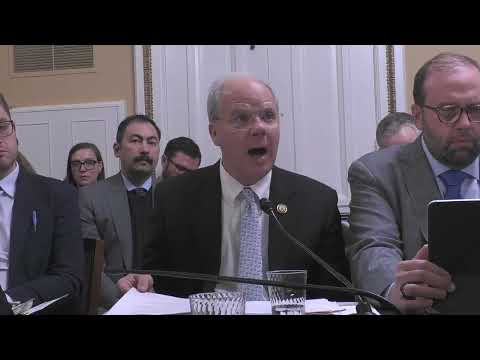
Unidentified committee member calls Affordable Care Act unaffordable, urges passage of Republican cost-cutting bill
Loading...
Summary
An unidentified speaker told the House Energy and Commerce hearing that the Affordable Care Act has left coverage unaffordable, cited figures on premiums, deductibles and out-of-pocket maximums, and urged adoption of the "Lowering Health Care Costs for All Americans Act," which he said would hold pharmacy benefit managers accountable and fund cost-sharing reductions.
An unidentified committee member told the House Energy and Commerce hearing that the Affordable Care Act has become unaffordable for many Americans and urged lawmakers to adopt the Republican "Lowering Health Care Costs for All Americans Act." The speaker said the bill would hold pharmacy benefit managers accountable and appropriate funds for cost-sharing reductions (CSRs).
The speaker framed the problem in stark terms, saying ‘‘Without a doubt, Obamacare has proven to be unaffordable,’’ and claimed that marketplace premiums have increased about 80%, average deductibles are roughly $5,000 and the average out-of-pocket maximum exceeds $20,000. He also said the law redirected taxpayer dollars to large insurance companies and that temporary COVID-era subsidies were intended to mask those affordability problems.
Why it matters: The speaker argued the GOP bill would take a different approach from permanent COVID-era subsidies, which he said were passed without Republican votes. He said the proposed bill includes measures intended to increase price transparency and constrain what he termed "nefarious practices" by middlemen such as pharmacy benefit managers, and that funding CSRs has previously lowered premiums.
Details and claims: The speaker asserted several numerical findings and legislative examples: that enhanced COVID subsidies were enacted twice and set to expire at year-end; that prior bipartisan support existed for funding CSRs; and that funding CSRs reduced Affordable Care Act premiums by about 11%. He also said Democrats prioritized tax credits for electric vehicles and cited $27,000,000,000 in related spending and a $2,000,000,000 disbursement to an organization he said previously had $100 in revenue. These figures were presented by the speaker as part of his argument; the transcript does not record independent verification or responses from other committee members.
Attribution and next steps: In the portion of the record provided, no formal motion or vote occurred. The speaker closed by urging cross-aisle cooperation and saying he "yielded back" the floor; no further action was recorded in this transcript.
Ending: The hearing record supplied ends with the speaker yielding back the floor; the transcript does not show questions, responses, or votes on the bill.