Get Full Government Meeting Transcripts, Videos, & Alerts Forever!
Get email alerts on the Workforce Housing topic
No spam. Unsubscribe anytime.
Legislature advances bill to fast-track temporary workforce housing in M‑1 zones with guardrails
Summary
Lawmakers moved Bill 240-38 to the third-reading file after debate about speeding approvals for temporary workforce housing in M‑1 industrial zones; supporters cited military-related demand and safeguards, opponents warned the measure bypasses GLUC review and local notice requirements.
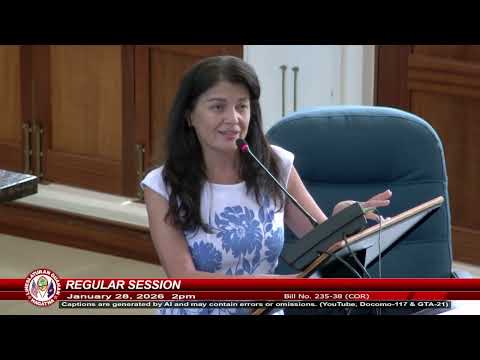
The Guam Legislature advanced Bill 240-38 to the third-reading voting file after floor debate that balanced urgency to address workforce-housing shortages with concerns about bypassing long-established land‑use review procedures.
Unidentified Speaker 2, the bill’s author, told colleagues the measure adds temporary workforce housing as a permitted use in M‑1 (light industrial) zones with specific safeguards: baseline infrastructure requirements (six-inch water line, sanitary sewer, minimum fire flow), perimeter fencing, a development plan covering sanitation/food/security/medical care and initial 24‑month approvals followed by annual renewals and inspections.
Supporters cited mounting demand from the island’s military build-up and data raised in committee and the record — including Guam Department of Labor figures and Guam Association of Realtors testimony — showing thousands of H‑2B workers and pressure on local housing stock.
Opponents, however, warned the bill would remove the Guam Land Use Commission’s (GLUC) role to impose conditions and to review site-specific concerns (notices to adjacent landowners and mayors, project‑specific conditions, and agency review by DPW, DPHSS, Guam EPA, Guam Water Works and others). One senator cautioned the fiscal note indicates potential revenue impacts from eliminated application and renewal fees and urged protecting adjacent residents’ interests.
After debate about streamlining versus maintaining public notice and agency review, the body moved Bill 240-38 to the third-reading voting file by voice/hand vote without objection.
What happens next: The bill advances to the Legislature’s third‑reading calendar for a future roll-call vote. Lawmakers requested agencies’ input on implementation details and questioned how existing agency permitting and public‑health safeguards will be preserved if GLUC review is curtailed.