Get Full Government Meeting Transcripts, Videos, & Alerts Forever!
Get email alerts on the Licensing Framework For Federal Workers topic
No spam. Unsubscribe anytime.
Subcommittee adopts amendment directing Maryland Department of Health to develop licensing plan for certain federal health workers
Summary
A Health and Government Operations subcommittee adopted an amendment to Senate Bill 749 directing the Maryland Department of Health to develop a plan to license certain health workers who left federal employment after Jan. 20, 2025; the change drew debate over single-subject and transparency concerns but was adopted and the bill reported favorable as amended, subject to attorney general review.
A Health and Government Operations subcommittee on Jan. 28 adopted an amendment to Senate Bill 749 asking the Maryland Department of Health to develop a licensing framework for health professionals who left federal employment after Jan. 20, 2025.
Delegate Dolley Lopez, the amendment sponsor, said the change is intended to help the state absorb skilled health workers — particularly nurses — into Maryland’s workforce after they were separated from federal positions. “The amendment asked the Department of Health to come up with a plan of how we can come up with a licensing framework for federal workers who have been impacted,” Lopez said, emphasizing that the amendment requests a plan rather than immediate implementation.
Opponents warned the language goes beyond a study. A representative opposing the amendment, Dougherty, said, “This is a little bit more than a study. It is a direction to the health department to develop an implementation of this,” and argued the measure could amount to declaring state policy without fuller stakeholder input. Dougherty recommended alternatives such as an emergency bill for people terminated since Jan. 20, 2025, or a chairman’s letter directing a study.
Supporters said codifying a plan in statute would give the Department of Health clearer guidance and signal the General Assembly’s intent while preserving later legislative oversight. “Putting it in statute also gives the department not just guidance, but some assurance that this is the will of the Maryland General Assembly,” Delegate Bagnell said, noting the amendment is targeted to a specific population and a narrow, time-bound event.
Lawmakers asked procedural and practical questions during the debate. Delegate Hutchinson raised concerns that expanding a dental bill to cover all health occupations could violate the single-subject rule and reduce public transparency without separate hearings. Lopez and the chair said they would consult the attorney general’s office about single-subject issues after the subcommittee’s favorable action. Members also noted the department would still need follow-up legislation to implement licensing changes, leaving opportunities for further public input.
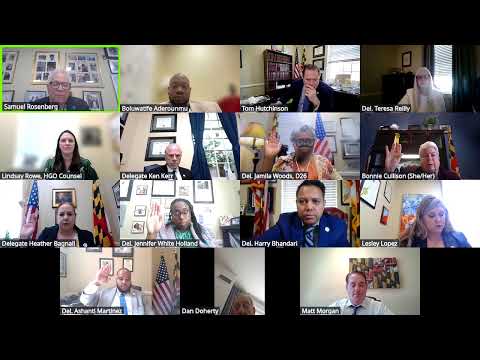
After discussion, the subcommittee moved, seconded and adopted the amendment by raised-hand count (members recorded in favor included Delegate Woods, Delegate Bagnell, Delegate Cullison, Delegate Bandari, White Holland and the chair; opposed were Delegates Hutchinson, Riley and Morgan). The committee subsequently voted to report the bill favorable as amended, with the understanding the sponsor will consult the attorney general’s office about single-subject concerns.
The subcommittee’s action does not itself change licensing rules; it directs the Department of Health to study and report back on options, including paths to temporary or permanent authorization for the specified population. The committee chair said the proposal could be reviewed in a subcommittee or full committee prehearing should the department produce a plan and the legislature consider implementation in a future session.