Get Full Government Meeting Transcripts, Videos, & Alerts Forever!
Get email alerts on the Economic Forecast topic
No spam. Unsubscribe anytime.
UCF economist tells Sarasota commissioners federal uncertainty, tariffs and high debt complicate local budgeting
Summary
Dr. Sean Snaith told the county commission that elevated federal policy uncertainty, tariffs and a high U.S. debt-to-GDP ratio create forecasting challenges; locally he called Sarasota's labor market and housing conditions relatively strong, while warning fiscal pressures could reduce discretionary federal support for local projects.
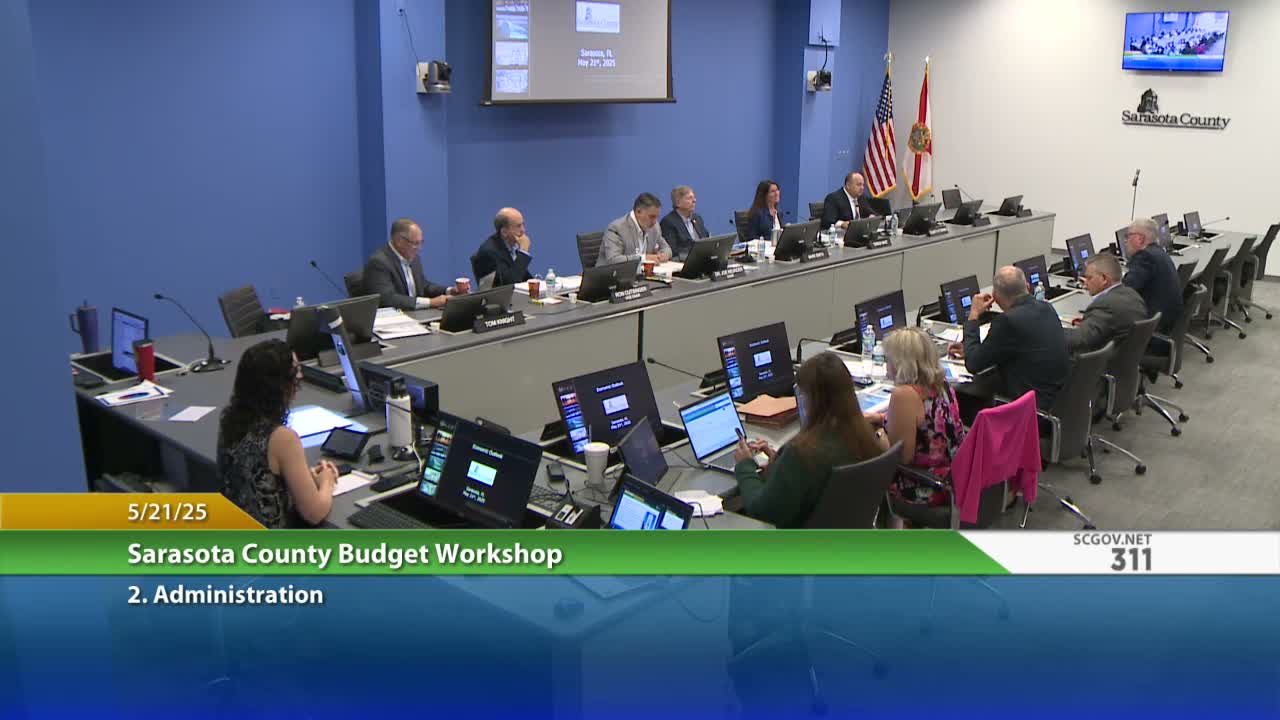
Dr. Sean Snaith, director at the University of Central Florida’s Institute of Economic Forecasting, told the Sarasota Board of County Commissioners on May 21 that national-level uncertainty — including tariff actions, trade disputes and recent federal fiscal maneuvering — has made forecasting more difficult and could constrain federal support for state and local projects. Snaith said the U.S. debt-to-GDP ratio is about 123% and that federal interest payments now exceed $1 trillion annually, with some projections near $1.4 trillion; those obligations, he said, will “squeeze” discretionary spending that state and local governments rely on for transportation and other capital projects.
Snaith warned that continuing resolutions and abrupt executive actions complicate planning and cited growing uncertainty tied to the 2024–25 political environment. On specific policy points he said tariffs can be used to secure concessions in trade negotiations and described how tariffs raise the level of some prices but are not a sustained inflation mechanism tied to money supply growth. He also described housing-market trends in Florida and Sarasota: inventory and prices have moved toward a balanced market (he cited a 12‑month moving average and a 5.5‑month supply metric), single-family home permits remain high while the condo market shows higher inventories, and the labor market remains strong with unemployment expected to drift but remain low.
Commissioners asked how these national and state trends should shape local budget decisions. Snaith advised caution in relying on federal/state funding assumptions, encouraged scenario planning, and emphasized monitoring emerging policy decisions from Washington and Tallahassee. The presentation was provided to the board as context for budget deliberations and no board action was taken at the meeting.