
St. Louis aldermen hear CDCs’ case for steady funding after tornado, pandemic-era cuts
Get AI-powered insights, summaries, and transcripts
Sign Up Free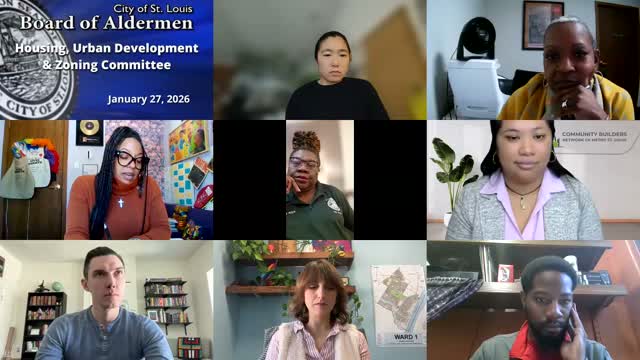
Summary
Community development corporations told the Board of Aldermen’s Housing, Urban Development and Zoning Committee they are key to disaster response and neighborhood stability but face funding shortfalls after federal cuts and rising costs; CDC leaders urged the city to consider dedicated operating support.
St. Louis City’s Housing, Urban Development and Zoning Committee on Jan. 20 heard a presentation from the Community Builders Network and several legacy community development corporations about their neighborhood work, rapid tornado response and urgent funding needs.
The Community Builders Network’s executive director, Linda, told the committee the coalition planned to explain what CDCs do locally and why their place-based work matters for recovery and longtime neighborhood stability. "We are all here because we all love St. Louis," Linda said, framing CDCs as neighborhood-rooted organizations that both respond in emergencies and sustain long-term revitalization.
Constance of the North Newstead Association described CDCs as “place-based nonprofits” that serve low- and moderate-income residents and noted the current local footprint: CDCs self-report covering about two-thirds of the city across 40-plus neighborhoods and operating in 12 of the city’s 14 wards. She said there are approximately 11 CDCs currently operating in St. Louis City.
ParkCentral’s presenter, Abdul, described ParkCentral as the consolidation of three legacy CDCs now working across 15 neighborhoods. He said ParkCentral reached roughly 66,000 residents in 2024–25 through direct services and events, and that the organization invested about $2 million in anti-displacement assistance over the past five years. "We provided over 20,000 meals" during the tornado response, Abdul said, describing emergency allocations of reserves and staff time to immediate relief.
Becky Reinhart of DeSales Community Development recounted five decades of neighborhood-focused affordable housing work, including using state and federal low-income housing tax credits and producing roughly 250 affordable units over time. She said CDCs also act to neutralize vacant and abandoned properties and provide mission-driven property management.
Michael Burns, president of Northside Community Housing, described longtime housing production and the scale of tornado damage his organization faced. "FEMA told us that they were actually for individual homeowners and not for multifamily developments, so we didn't qualify under that program," Burns said, adding that the Small Business Administration later rejected an application on balance-sheet/income grounds after months of providing requested documentation.
Presenters outlined concrete impacts and gaps: North Newstead reported about 138 units in its portfolio were affected by the May 16 tornado and that 16 families were immediately displaced; the organization said it expended roughly $13,000 in reserves and estimated property damages at about $4.5 million with an anticipated insurance payout of approximately $2.2 million. ParkCentral said it had invested more than $200,000 in home repairs (about 143 homes) and raised roughly $350,000 annually to fund place-based commercial and neighborhood work.
Aldermen thanked speakers and pressed on federal and insurance assistance. Alderman Browning asked Burns to explain why FEMA and SBA assistance had been limited; Burns said multifamily properties generally did not qualify under FEMA’s individual assistance criteria and that SBA staff ultimately determined CDC loan eligibility based on cash-flow and income metrics that disadvantaged mission-driven organizations that operate leanly.
Several aldermen, including Alderman Aldridge and Vice Chair Sauniere, called for exploring municipal budget support and other nonfederal resources to stabilize CDC operations now that general operating CDBG dollars have not routinely flowed to CDCs since about 2014. Committee members encouraged presenters to provide short video clips or slides for broader public outreach about CDC roles and to return with more concrete requests the committee could vet for budget consideration.
The committee recorded routine procedural actions: it approved the minutes from Jan. 20, moved to excuse one member for necessary absence, and adjourned after the presentation.
What’s next: presenters and committee members agreed to follow up. CDCs asked the committee to consider ways the city might provide sustained operating support, prioritization in recovery funding and help navigating federal recovery systems; the committee signaled interest in further budget conversations and in distributing presentation materials to a wider audience.