Get Full Government Meeting Transcripts, Videos, & Alerts Forever!
Get email alerts on the Code Enforcement topic
No spam. Unsubscribe anytime.
Coldwater appeals board affirms code-enforcement findings for 340 W. Chicago St.
Summary
The Property Maintenance Board of Appeals affirmed prior code-enforcement determinations against the owner of 340 W. Chicago St. (Case PMA25-01), directing staff to pursue enforcement — including court action and potential demolition — if repairs aren’t made within the court-ordered timeframe.
The Property Maintenance Board of Appeals in Coldwater affirmed prior code-enforcement determinations against the owner of 340 West Chicago Street, a property identified in Case PMA25-01, and directed staff to take appropriate enforcement action if required repairs are not completed.
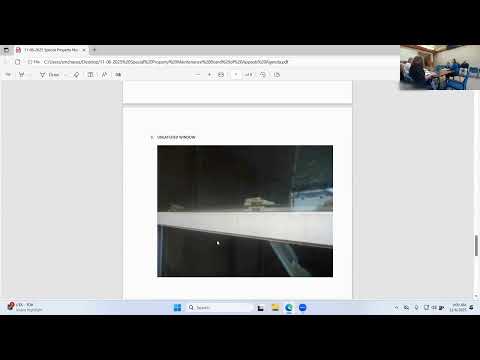
The decision follows repeated inspection reports and board discussion that the building remains unsecured, exposed to weather and animals, and has not seen substantive corrective work since earlier orders. Unidentified Speaker 3, who reported recent inspections, said, "I've already posted one point uninhabitable," and warned the structure will deteriorate further without immediate work. Board members described the property as unsafe in parts and noted persistent open entry points and water intrusion.
Board members discussed options for remediating the property. Speakers said the owner had consulted engineers and architects but had limited progress; an engineer’s low-end repair estimate mentioned in the discussion was about $650,000. The board debated whether to rely on citations or pursue court action. Unidentified Speaker 1 explained the typical enforcement path: initial citations, potential fines that can begin around $100 and increase (a transcript reference to $102.50 was made), and, if noncompliance continues, a circuit court action that commonly allows roughly 90 days to start repairs before the court may order demolition. "If she fails to do so, then the court can order it demolished," Unidentified Speaker 1 said.
After discussion, Unidentified Speaker 1 moved to affirm the determinations of code enforcement staff (identified in the record as Steve and Kenny) and to direct staff to pursue appropriate enforcement, including court filing if necessary. The motion received a second and was adopted by the board.
Board members said the city may initially carry the cost of demolition, then bill the owner; unpaid costs can be placed on the property tax roll and could lead to foreclosure if not paid after several years. Officials emphasized the process is slow and intended to balance enforcement with giving property owners opportunity to make repairs. The board also agreed to periodic follow-ups on outstanding matters and tentatively referenced a future check-in around Nov. 15.
The board took no further immediate action at the meeting beyond affirming the prior code-enforcement determinations and instructing staff to proceed. The case remains subject to further administrative or court proceedings.