
Beatrice school staff detail K–12 financial-literacy instruction and completion gaps
Get AI-powered insights, summaries, and transcripts
Subscribe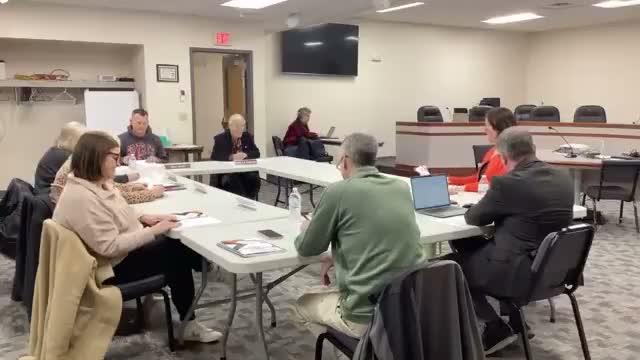
Summary
District staff told the Board of Education Committee of the Whole that financial literacy is built into elementary, middle- and high-school programs, that high-school coursework is required for graduation, and that some students still need alternatives if they do not pass the required course.
Beatrice Public Schools staff delivered the board-required financial literacy update on Jan. 26, laying out classroom practices from elementary behavior-based lessons to a required high-school course.
"At the high school, we know that our students are required to take financial literacy to meet graduation requirements," said a staff member (Speaker 4), who described course topics including credit, budgeting, taxes and investments. The presentation noted most students take the course in junior year to coincide with workplace experience.
At the elementary level, Presenter 4 said teachers use a classroom 'behavior box' to teach responsibility with money; middle-school lessons include a discussion of the national-debt 'debt clock' and career-technical classes run grocery-shopping and meal-prep simulations. The staff member said the district emphasizes hands-on learning and classroom integration to increase student understanding.
Speaker 4 also said the district has identified completion gaps: students who do not pass the required course may be offered retakes in senior year or the option to complete the content in Edgenuity over the summer. "So if students are not passing this course, then they have to look at one of those alternatives," Presenter 4 said.
Board members pressed for better public communication after several said the community perceives the district does not teach financial literacy. A board member suggested radio outreach or a designated month to raise public awareness; Speaker 4 invited board members to observe a professional-development day in February to see instruction and materials in action.
The committee did not take formal action on curriculum changes during the meeting; Speaker 4 framed the update as compliance with state statute and an opportunity to inform parents and the community about what is being taught.