
Cook County staff outline possible overhaul or dissolution of subordinate service districts amid compliance and capacity concerns
Get AI-powered insights, summaries, and transcripts
Subscribe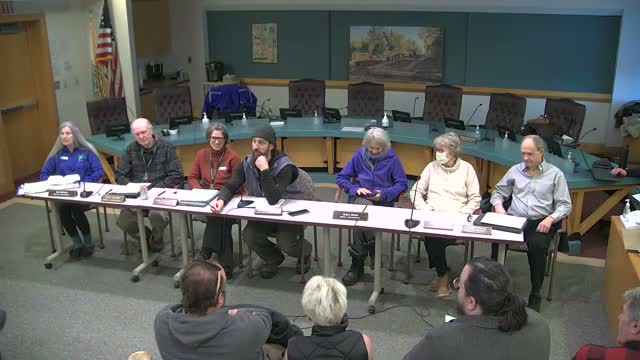
Summary
County staff told a packed town hall they are considering dissolving or overhauling subordinate governmental service districts (SGSDs), citing administrative strain, inconsistent compliance and legal questions; residents and contractors urged fixes, not elimination, and flagged emergency access and property‑value risks.
County staff and commissioners told more than 60 residents at a Cook County town hall on Jan. 29 that they are exploring a range of options — including substantial reform or possible dissolution — for the county’s subordinate governmental service district (SGSD) program.
The meeting opened with Commissioner Mills stressing the session was a town hall, "not official," and that staff were there to listen and gather input before any change would be made. County administrator Kristen Trebelhaverma, who said she will have been on the job six months next week, framed the meeting as a chance to "hear feedback on the services that we provide" and promised follow-up work.
Engineers and administrators described SGSDs as a tool that lets residents on non‑county roads (private, DNR or Forest Service roads) secure road maintenance. "It's a way for folks who live on non serviced roads to get road maintenance," County Engineer Robert Hass said, while noting these are not county‑owned roads and that the county may not be able to provide service where jurisdiction belongs to another agency.
Staff presented program data showing nine SGSDs with 259 properties enrolled (29 homesteads), road lengths from roughly 2,000 feet to 10.5 miles, and notably uneven contractor performance — summer contractor reliability was described as about 45% in the county’s five‑year average analysis.
Officials identified three broad problems driving discussion: limited county capacity to administer and reliably deliver services; legal and compliance questions about whether counties can special‑assess properties where the county does not provide the underlying service; and equity concerns about parcels that benefit without paying or districts that do not meet compactness and contiguity standards in statute.
"We have responsibility for these roads without the authority," Trebelhaverma said, summarizing a central administrative dilemma staff want to resolve. County staff said a fully compliant SGSD program would require significant new staff and dedicated mapping, automatic enrollment workflows and contractor‑agreement management.
Residents pressed multiple alternatives. Local contractor Chris Short urged simpler, clearer bidding outreach and said the paperwork is minimal; he recounted routine email and phone exchanges with county staff and recommended wider contractor outreach to increase competition. Several longstanding SGSD members said their districts function well and warned dissolution would create hardship, reduce emergency access and depress marketability of properties.
Assessors and staff disputed some worst‑case property‑value fears: County Assessor Bob Thompson told the room that assessments are driven by market sales and that the county does not set values differently because a road is SGSD‑plowed versus county‑plowed. Residents and other speakers countered that lenders, insurers and buyers may treat access and service differently, which can affect market value in practice.
On legality, staff said recent review had identified cases where administration did not match statutory authority — for example, some districts included DNR or Forest Service roads where county authority to assess or administer is unclear. Staff referenced specific instances (River/Bremer/Murmur Creek were discussed) and said those discoveries prompted a closer look at program compliance.
No decisions or votes were taken. Commissioners emphasized the process would be deliberate: staff will collect more information, consult the county attorney, meet with SGSD liaisons and consider work groups or hybrid models rather than rushing to eliminate the program. Officials said any policy change would require a public hearing and follow established procedure.
The most immediate next step is further analysis and outreach. Commissioners directed staff to develop clearer cost estimates, legal options and a communication plan that includes SGSD liaisons. "This is step one in many, many steps," Hass said. The county also pledged to reach out to fire chiefs, the sheriff and state agencies where jurisdictional transfers may be required.
If the county proceeds with formal changes, the board would bring proposals back through committee and public hearings; meanwhile, staff asked residents to sign in, join follow‑up work groups and provide written input.