Get Full Government Meeting Transcripts, Videos, & Alerts Forever!
Get email alerts on the Behavioral Health topic
No spam. Unsubscribe anytime.
Horry County presents coordinated behavioral-health, harm-reduction updates and proposes mobile MAT pilot
Summary
County behavioral-services leaders, jail staff, police and fire-rescue officials briefed council on coordinated responses to substance use and mental-health crises, reported program metrics and outlined a proposed mobile medication-assisted-treatment pilot to deliver buprenorphine in the field.
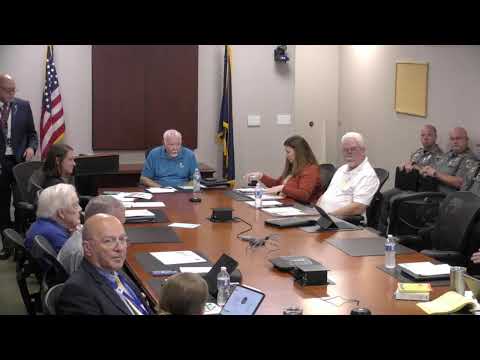
Horry County officials on Sept. 9 gave the county council a cross-agency progress report on behavioral health and harm reduction, laying out service volumes, program expansions and a proposal for a mobile medication-assisted-treatment (MAT) pilot.
The county’s behavioral services office, newly staffed with a community engagement coordinator and a strategic coordinator, described its role as a central coordinator to remove barriers for providers and to measure success by lived experience. "Our plan is to meet with service providers, community members with lived experience, and other key stakeholders so that we can really identify our current baseline," the department representative said.
Marcus Rhodes of the J. Reuben Long Detention Center described the jail’s Next Steps team, a multidisciplinary collaboration of peer-support specialists, counselors, corrections personnel and community providers. Rhodes said 73 incarcerated individuals were currently engaged in in-custody recovery programs and that 138 people were on a waiting list because of staffing and space limits. He gave a recent example of cross-jurisdictional coordination in which staff transported an individual home to Florence and reconnected her with local police and family.
Candy Townsend, who represents the county’s treatment court, highlighted two decades of the program’s work. "This year marks 20 years of treatment court in Horry County," Townsend said, noting a recent large graduation and a 73 percent completion rate reported for the prior year. She said the 15th Circuit (Horry and Georgetown counties) accepted 248 new participants in the referenced period and that the treatment court has placed graduates into peer-support and staff roles.
A Horry County Police Department sergeant summarized the county’s crisis-intervention outreach (recorded in the transcript as the unit’s name), reporting 4,113 calls for service between Sept. 1 and Aug. 31 in the cited year window, 2,647 individual contacts and nearly 3,000 addresses reached. The unit said it connected roughly 30 percent of those contacts to outpatient or inpatient services and is working to increase follow-up and Spanish-language materials for the county’s Latinx community.
Christian Edwards, supervisor of the Horry County Fire Rescue Harm Reduction Team, described prevention, education and outreach work, including Narcan trainings, distribution of harm-reduction kits and help attaining marketplace insurance for treatment access. Edwards reported that the harm-reduction team has engaged thousands of residents through follow-up visits and outreach, and has left Narcan kits with individuals and on apparatus. He said the team averages about 25 treatment referrals per month and is exploring a mobile MAT program that would allow a harm-reduction paramedic to assess a patient and, if appropriate, administer buprenorphine (Suboxone) in the field and arrange a next-day appointment with a local treatment provider.
Edwards said county staff are pursuing necessary authorizations for paramedic dosing and that pilot logistics include staffing, follow-up appointments and partnering providers. "If the patient is agreeable, the paramedic will dose with buprenorphine," Edwards said, describing the intended workflow.
Officials emphasized cross-agency coordination—law enforcement, fire rescue, courts and community providers—and noted remaining constraints: limited treatment capacity inside the detention center, wait lists for services, staffing needs across teams and the need to secure regulatory authorizations for the proposed mobile MAT pilot.
Next steps described at the meeting included continued hiring for peer-support roles, further case-management software discussions to improve information sharing, outreach and education campaigns, and additional coordination with schools for prevention programming. Council members and presenters expressed support for continued expansion while noting capacity and authorization hurdles ahead.