Get Full Government Meeting Transcripts, Videos, & Alerts Forever!
Get email alerts on the Rail Infrastructure topic
No spam. Unsubscribe anytime.
RJ Corman seeks Horry County commitment for $16 million Carolina Line rehab
Summary
RJ Corman presented a $16 million plan to rehabilitate the Carolina Line in Horry County, describing proposed federal and company contributions and asking the committee for a letter of commitment and a small study of passenger‑service potential.
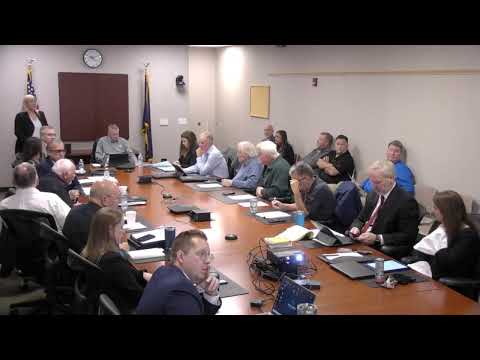
RJ Corman representative RJ Coleman asked Horry County to back a $16 million rehabilitation of the Carolina Line, saying federal and company funding would cover most project costs and requesting a county letter of commitment and a limited follow‑up study. "The whole project total is $16,000,000 and that is in Horry County," Coleman said during a committee presentation. He told the committee the Federal Railroad Administration (FRA) would contribute a large portion of the funds and that RJ Corman would provide a multimillion‑dollar match.
Coleman summarized recent progress along the corridor and showed before‑and‑after images of crossings and switches, saying the work includes 13,600 linear feet of surfacing, thousands of tons of ballast, significantly more ties and multiple crossing replacements. He described technical challenges on the corridor tied to local soil conditions and older rail infrastructure, and said the project would raise the track class and improve safety and reliability.
Coleman laid out the financing plan: he said FRA grant funds would account for the largest share, RJ Corman would contribute roughly $3.4 million, and the presentation identified a county ask of about $1.4 million as a local match. He characterized the committee’s immediate request as a letter of commitment and permission for staff to perform a limited study and return with refined cost estimates. "Our ask is just for a letter of commitment towards this project," he said.
Council members asked about timing, passenger‑service potential and whether the project would move the corridor toward higher track classes for passenger operations. Coleman said the current project would upgrade elements to bring the line closer to the standards required for higher class and that a separate, larger investment would be needed for full passenger service. Several members asked staff to return with cost comparisons and a short study to clarify what additional investment would be required to enable passenger rail.
The presentation also referenced specific crossings to be replaced and noted the county portion of the corridor was included under the lease agreement RJ Corman holds. Coleman said the team believes federal grant timing could place construction in 2026–27 and that some elements might be accelerated depending on funding releases.
Next steps: committee members asked staff to consult with RJ Corman, gather more precise cost and scope information, and return with a short study and recommended language for a commitment letter. The committee did not take a final vote on funding at the meeting.