Get Full Government Meeting Transcripts, Videos, & Alerts Forever!
Get email alerts on the Wildlife And Habitat topic
No spam. Unsubscribe anytime.
Big Muskego Lake District update: ice safety, nesting-island restoration and GPS-tracked ospreys
Summary
At its Jan. 27 meeting the Big Muskego Lake District received a deputy-commissioners update describing ice conditions, removal of invasive phragmites on three nesting islands, wetland work funded by a Holtz Foundation grant and osprey tracking begun in 2024.
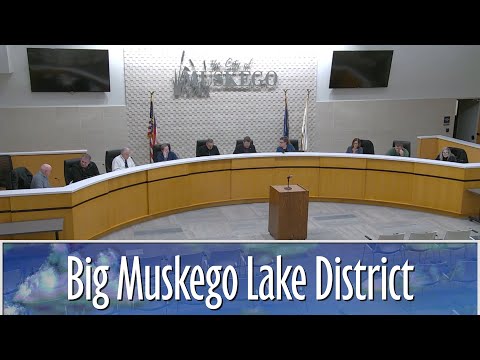
At a Jan. 27 meeting, the Big Muskego Lake District Board of Commissioners heard a deputy-commissioners update on lake conditions, wildlife habitat work and monitoring efforts.
The deputy commissioner reported that recent cold has improved ice cover but cautioned that “there's no such thing as safe ice,” urging continued caution as lake use increases. The presentation covered three main conservation efforts: removal of invasive phragmites from three nesting islands, reseeding of native vegetation, and wetland restoration along marshland between Holtz and Prigel funded largely by a Holtz Foundation grant.
The district funded “betterment of those nesting islands,” the deputy commissioner said, describing phragmites as a tall invasive reed that invaded the islands and required substantial removal and reseeding. The deputy commissioner credited local volunteers and staff for the work and highlighted a platform built last year that has provided stable osprey nesting substrate after other platforms failed because of poor soils. The platform work was attributed to deputy commissioners including Larry Schweitzer and Carl Hefner.
The board also heard that some osprey hatchlings were fitted with GPS transmitters in 2024. The deputy commissioner explained the devices rely on proximity to cell towers to transmit data, so full migration tracks are expected to appear as birds move closer to towers; the birds are expected to return to the U.S. by February. The deputy commissioner noted historical banding work by local volunteers, saying Bill Stout conducts annual banding and that banding has been used for decades to track returns.
Why it matters: Nesting-island restoration and wetland work protect habitat for fish and birds and contribute to recreational quality for lake users. The GPS data, once received, will help managers understand migration routes and inform long-term habitat planning.
The update concluded with board members asking about banding and site fidelity; the deputy commissioner said males are more likely to return near their rearing site, while some banding records show longer-distance returns. The board moved on to other business following the update.