Get Full Government Meeting Transcripts, Videos, & Alerts Forever!
Get email alerts on the Housing Development topic
No spam. Unsubscribe anytime.
Lodi SPARC approves 44-unit ‘Sunset Housing’ senior townhomes after finding gutted Sunset Theater lacks historic integrity
Summary
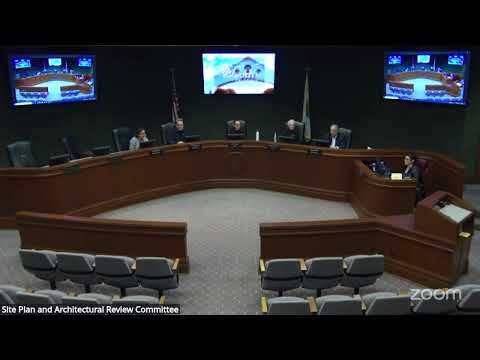
The Site Plan and Architectural Review Committee approved a 44-unit, 55+ townhome project at 1100 West Lodi Avenue, concluding the gutted Sunset Theater no longer meets CEQA historic-resource criteria; the motion passed 5-0 following public comment and technical questions about utilities, phasing and tenant relocation.
A City of Lodi planning committee on Jan. 14 approved a 44-unit senior townhome project called Sunset Housing at 1100 West Lodi Avenue, finding the proposal eligible for a CEQA Class 32 infill exemption and clearing the way for demolition of the long-vacant Sunset Theater.
Deputy Director and city planner Cynthia Marsh presented the project and the environmental findings, telling the Site Plan and Architectural Review Committee that "the city has determined the project qualifies for class 32 infill exemption, and that a notice of exemption would be filed." Marsh said two consultant reports — a phase 1 cultural resources inventory and a historic assessment — documented extensive interior and exterior alterations and concluded the theater no longer retains the integrity required to be a historic resource under CEQA.
Why it matters: The committee’s determination that the theater has lost the physical features that would convey historical significance means the city is not required to perform an Environmental Impact Report for the development under CEQA; it also resolved a contentious community question about whether preservation rules or tax-credit applications would block demolition.
Project details: The proposal covers five parcels (APNs 033-100-09, -10, -18, -19 and -20) and would build 44 two-story, for-sale townhomes targeted to buyers aged 55 and over, organized around a central clubhouse and common amenities including paths, a small dog area and outdoor gathering spaces. Units are roughly 1,600–1,655 square feet; the applicant proposes two construction phases (21 units with clubhouse in Phase 1, then 23 units). Vehicular access is planned from South Fairmont Avenue; internal drives are designed for two-way circulation. Staff said parking exceeds the minimum required by the Lodi Municipal Code.
Applicant and neighborhood perspectives: Architect and applicant John Viera of NJA Architecture said the owner, who also manages nearby apartments, "really saw a need, for the city and this community to have more senior housing" and chose a two-story, neighborhood-scale design rather than the higher density allowed by-right. Public commenters were split: historian Ralph Clark urged further investigation into the theater’s past and voiced disappointment about losing the building’s historic character, while several nearby residents said they welcomed repair of a long-vacant property and new senior housing.
Community concerns addressed: Committee members and the applicant discussed utility undergrounding, public-utility-easement (PUE) issues, trash and parking placement, stormwater treatment, and the location of transformers and condensers. Staff and the applicant confirmed overhead power lines along Lodi and Fairmont avenues would be undergrounded in the project area and that demolition work had documented asbestos and lead abatement records; staff said demolition will follow standard building-department inspection and dust-control procedures. The applicant said tenants in units removed by Phase 1 are the owner’s tenants and that relocation would be handled by the owner.
Action and vote: Member Hamilton moved that SPARC find the project exempt under CEQA Guidelines §15332 and approve the site plan (PL2025-012) for the 44-unit senior townhome project; Member Will seconded. The motion passed unanimously, 5-0.
Next steps: Staff will file a Notice of Exemption and proceed with required plan-review and engineering steps (public-works review, precise utility routing and final landscaping/species selection). The project will return to applicable permit processes for detailed engineering and building permits; Marsh said any future design changes (including potential ADA units) would be brought back to the committee.
Limitations and unresolved items: Committee members flagged remaining technical items — final resolution of PUE encroachments, precise stormwater details, placement of trash enclosures and transformer/condensing units, and coordination with immediate neighbors about fencing and construction notifications. Several public speakers requested clearer commitments on tenant relocation and neighborhood notices for power outages and construction timing.
The committee adjourned after brief updates on other planning items and a reminder that staff will post downtown-specific-plan materials for public review.