District cites assessment and screening changes for declines in highly capable identification, notes rise in special-education enrollment
Summary
Northshore staff told the board that changes to kindergarten screening and a new math assessment reduced identification rates for highly capable services and that special-education enrollment rose post‑COVID; staff said they are investigating category-level drivers and will report back.
District leaders told the board that assessment and screening choices have materially changed which students are identified for certain programs and that special-education enrollment increased after the pandemic.
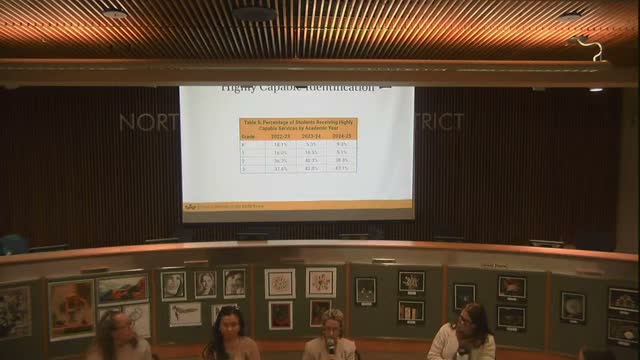
"Following the 20 two-twenty 3 school year, we discontinued universal screening for our kindergarten students," Amity Butler said, explaining that ending universal kindergarten screening contributed to a drop in the percentage of students qualifying for highly capable identification (Butler cited a change from about 18.1% to 5.3% in the relevant cohort). Butler also said a change to a nationally normed math assessment reduced first-grade qualifiers for that designation from 16.5% to 5.1%.
Craig Foster, the director of research and evaluation, described the district’s approach to measurement: he presents statewide comparisons (SBA) alongside within-year I Ready cohort growth so the board can see both end-of-year status and how students move during the year. Foster emphasized the limitations of adaptive assessments and sampling variation but reported concrete within-year growth percentages: for kindergarten, 47.7% of students were on grade level at initial assessment and 43.7% of students who began one grade level below moved onto grade-level standard during the year.
Doreen Milburn said special-education enrollment rose after COVID and noted a sustained increase in early‑childhood students receiving services in 2023–24. "When I think through 2324, that's a pretty big increase," Milburn said; she told the board she is pulling more data on eligibility categories and will report findings back to the board.
Board members asked whether screening and assessment changes might conceal or reveal genuine changes in student need; Butler and Foster said the changes were intentional to better target services, but also that some patterns require more investigation before firm conclusions can be drawn.
No formal votes or policy adoptions were taken during the study session; staff committed to further analysis and to bringing pilot and validation data to curriculum and board committees.