Northshore staff flag preschool access, kindergarten readiness gaps and outline targeted interventions
Summary
District staff told the school board that about 254 children in the district qualify for free preschool but enrollment lags; presenters highlighted persistent readiness disparities by race and gender and described pilot interventions including structured literacy, MTSS and targeted coaching.
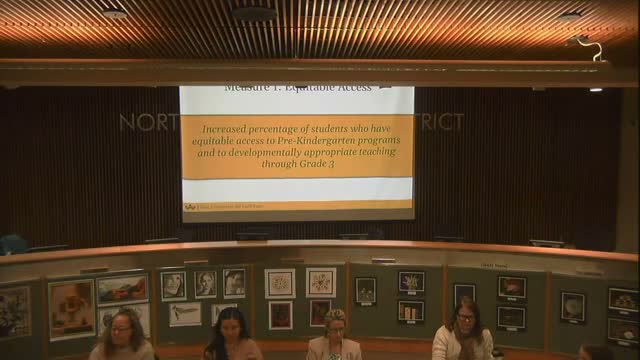
District staff presented a data-rich review of early learning on the Northshore School District’s strategic plan Goal 1, saying the system has open preschool seats even as readiness and equity gaps remain.
“There's about 254 kids within our service area here in North Shore that would qualify for a free preschool program,” Doreen Milburn, the district’s executive director of special education, told board members during the study session. Milburn said the district has open slots and that family support specialists and community outreach teams are actively recruiting eligible students.
The presentation grouped measures into access, literacy, math and social-emotional development and relied on data sources such as I Ready assessments, the state SBA, WA Kids (the kindergarten readiness assessment) and WIDA for English-language learners. Staff emphasized two kinds of analyses: end-of-year snapshots and within-year cohort growth to show how students move during the academic year.
The district said readiness is unevenly distributed. Amity Butler, executive director of teaching and learning, said the report shows Hispanic or Latino readiness rates that “fluctuate between 44–67%,” that some Black students enter at lower rates despite recent gains, and that students receiving special education services “can be up to 50 percentage points below” peers on some readiness measures. Butler told the board these disparities mean equity work must begin before children enter district classrooms.
To address gaps, staff outlined multiple strategies: family outreach (including parent councils and parent education events), co-taught Ready Start and Head Start classrooms, a structured-literacy pilot in roughly half the district’s schools, expanded Tier 2 interventions within classrooms so students are not pulled out of core instruction, and professional development and coaching for teachers. Butler said the district will present pilot results to the curriculum committee (CMAC) before making broader curriculum decisions.
On screening and diagnosis, presenters stressed limits on what schools can do: district staff conduct vision and hearing screens and flag reading difficulties, but clinical diagnoses — for example of vision-processing conditions or dyslexia — require outside medical or eye-care providers. “School districts can't diagnose that,” a board member said; staff agreed and described referrals to clinicians for formal diagnosis.
Staff also noted local funding the district has directed to early childhood. Butler described a Snohomish County transportation fund grant — referred to in the presentation as a “pasta grant” and financed through light-rail-related transportation dollars — that the district has used for early-childhood English-learner supports and kindergarten transition work.
The session ended with board members thanking staff for the comprehensive report and the accompanying written analysis, which members said helped them interpret the slides and surface patterns for future decision-making. President Hayes adjourned the study session and moved on to the business meeting.
The district said it will continue to analyze subgroup patterns, pilot instructional changes and return with additional data and implementation plans.