Get Full Government Meeting Transcripts, Videos, & Alerts Forever!
Get email alerts on the Public Health Veterans topic
No spam. Unsubscribe anytime.
County considers $60,000 opioid-settlement pilot to support veterans, first responders
Summary
Operation Mind, Body, and Soul asked commissioners for a two-year pilot using opioid-settlement funds—$60,000 year one and $40,000 year two—to provide fitness, peer support and mental-health services to veterans, first responders and law enforcement. Commissioners agreed to consider the request at the next meeting after hearing other applicants.
A local veterans-support organization asked Dubois County commissioners to fund a two‑year pilot program using opioid‑settlement abatement money to provide recovery and mental‑health supports to veterans, law enforcement and first responders.
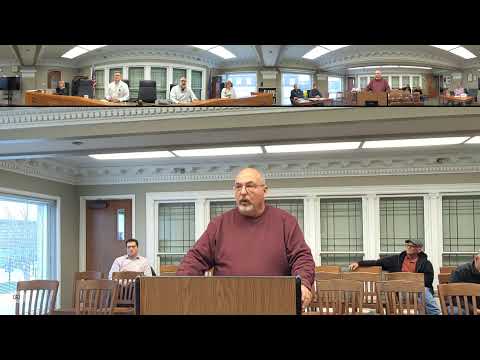
William Taylor, speaking for Operation Mind, Body, and Soul, said the program pairs fitness and peer‑support activities with formal behavioral‑health services and local VA outreach to reduce suicide risk and sustain recovery. "We propose a 2 year pilot program, requesting $60,000 the first year, $40,000 for the second year for the opioid settlement for veteran law enforcement, first responders, and mental health," he said.
Commissioners said they were sympathetic to the request but wanted to hear additional applicants (Safe Haven and others scheduled to present) before committing funds. The board has about $94,000 budgeted for opioid‑abatement grants this year; commissioners agreed to place the item on the next agenda to decide after hearing all applicants.
Taylor described local partnerships already in place — the Vet Center in Evansville, VA outreach and volunteer support — and emphasized the program’s community connections and plans to seek sustainability through grants. He said the program is active now and that the first year would support start‑up activities and coordination.
The county did not make an immediate funding commitment for year two; commissioners noted that subsequent funding would be contingent on next year’s budget and future board decisions. The board asked staff to schedule the remaining applicants at the next meeting and to return with a recommendation for allocation.