Lincoln hears water master plan update projecting roughly $538 million in long-term costs
Loading...
Summary
City staff presented a 200-plus-page water master plan identifying a roughly $538 million program of pipeline, storage and supply projects; staff said the city can meet near-term demand but will need additional supply and studies (groundwater, ASR, recycled water) before a 15-year horizon.
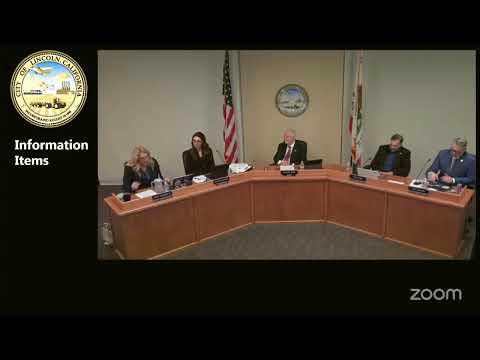
At a regular meeting of the Lincoln City Council, Engineering Manager Araceli Casares presented an update to the city's water master plan and outlined infrastructure needs, projected demand and recommended next steps.
The plan, Casares said, is a "living document" of more than 200 pages that prioritizes water-infrastructure investments across the city. She told the council the system serves about 23,454 connections (97% residential) across roughly 29 square miles, with about 280 miles of distribution and transmission pipe, five groundwater wells and three storage tanks. "This water master plan document is over 200 pages," Casares said during the presentation.
The consultant-backed study projects a maximum-day demand near 27.1 million gallons per day (MGD) and shows the city will need additional supply capacity before the 15-year planning horizon unless new sources come online. Council members and staff discussed comparisons with the 2017 master plan and noted a shift in emphasis to hydraulic-model detail and resilience. City staff said they budgeted a groundwater-feasibility study in the coming fiscal year and recommended exploring aquifer storage and recovery (ASR), expanded PCWA capacity and recycled-water opportunities as ways to diversify the portfolio.
On funding, staff said connection fees from new development are expected to pay the majority of the program: the presentation and a public commenter both cited an overall program estimate of about $538 million (the commenter restated a $539 million figure, noting roughly $529 million to be paid by connection fees and about $10 million by current water users). The city manager and staff explained the council previously committed about $40 million in connection-fee revenue to reserve capacity credits in PCWA's Phase 1 project; staff emphasized future decisions about purchasing additional PCWA credits or directing funds to city projects will come through future budget processes.
Council members pressed staff on contingencies and timing. Staff warned that much of the city's current daily supply flows through a single transmission line and that, if that line failed, the city could sustain service only a few days under peak summer demand without backup capacity. "The strategy here is partly to become just slightly more self-sufficient so that we can hold ourselves up," a city official said.
There was no formal action on the master plan at the meeting; staff said they will track public comments and return with an adoption item at a later date after additional studies and budget work.
Next steps the city identified included the planned groundwater feasibility study (including ASR evaluation), continued coordination with PCWA and Nevada Irrigation District on surface-water options, updates to the urban water management and rate studies, and incorporation of the master plan recommendations into forthcoming capital and budget decisions.