Get Full Government Meeting Transcripts, Videos, & Alerts Forever!
Get email alerts on the Roundabouts Design And Project topic
No spam. Unsubscribe anytime.
Wenatchee City holds public session on roundabouts; consultant backs mini-roundabout for Crawford and Okanagan
Summary
City of Wenatchee hosted a public education session where consultant Sean Samsel reviewed roundabout safety, design elements and an early recommendation that a mini roundabout could suit the Crawford and Okanagan intersection; council and residents pressed staff on pedestrian beacons, sight lines and speed mitigation.
A public education session on roundabouts held by the City of Wenatchee brought transportation consultant Sean Samsel of KPG Somos together with city staff and residents to explain how roundabouts work, present safety research and offer early observations about a proposed mini roundabout at Crawford and Okanagan.
Samsel, a licensed engineer who has worked on more than 20 roundabouts, told the council and public that national and international studies show substantial safety benefits from roundabouts, including cited reductions in severe crashes (up to 82% in some studies) and overall crash reductions compared with stop‑controlled and signalized intersections. He noted pedestrian crash studies are fewer but reported ranges of about 40–73% reductions from credible sources including the Crash Modification Factor (CMF) clearinghouse and NHTSA analyses.
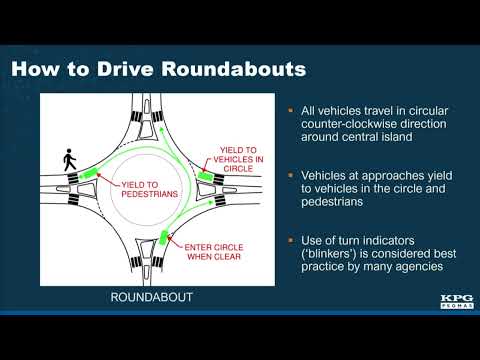
The presentation covered how roundabout geometry reduces head‑on and high‑severity angle collisions by cutting conflict points and creating a lower‑speed environment (typical travel speeds through roundabouts often fall in the 20–25 mph range). Samsel explained design features—central islands, truck aprons, splitter islands, and approach deflection—that influence driver speed and visibility, and he emphasized sight‑distance checks and intersection control evaluation (ICE) as the data‑driven process engineers use to decide whether a roundabout is appropriate for a specific site.
Samsel presented a local before‑and‑after case study at Springwater and Western where a mini roundabout installed in late 2018 reduced reported injury crashes substantially (he cited four injury crashes in a prior two‑year period and only one low‑severity injury crash in the four years after installation). He said failure to yield remains the most commonly reported contributing factor in post‑installation police reports.
Turning to the Crawford and Okanagan location, Samsel said the corridor context and volumes (Crawford ~11,000 vehicles per day; Okanagan ~2,000; intersection ADT roughly 13,000) place the intersection within ranges where a mini or single‑lane roundabout can function effectively. He said a mini roundabout would shorten pedestrian crossing distances (from about 40 feet to roughly 12–15 feet), provide refuges and create corridor consistency with an existing roundabout a quarter mile east.
Council members and residents asked detailed questions about oversized vehicles, a sight‑obstructing shrub at Springwater/Western, advisory and regulatory speeds (the presenter noted advisory plaques commonly read 15 mph while corridor regulatory speed may be posted at 20 mph), and measures to improve pedestrian visibility. Samsel recommended including actuated pedestrian beacons (rectangular rapid‑flashing beacons) in designs where appropriate and described other traffic‑calming tools—speed tables, rumble/mumble strips and speed feedback signs—that can complement engineering measures. Zach Horton, the city project engineer, said staff are exploring whether budget allows retrofitting actuated beacons on the Crawford approaches.
Several residents who had initially been uncomfortable with the Springwater/Western roundabout said they learned to use it over time and now favor the safety benefits; others said delivery trucks reroute to avoid the roundabout and asked staff to consider vehicle routing and sight‑distance fixes. The session concluded with staff offering to meet with attendees outside for more detailed questions and the city saying it would post the presentation videos and handouts online.
Next steps: the city is in early concepting for the Crawford & Okanagan mini roundabout; staff said they will continue design work, run ICE analyses, coordinate with emergency and municipal services and determine whether funding is available to add actuated pedestrian beacons to the project design.