Get Full Government Meeting Transcripts, Videos, & Alerts Forever!
Get email alerts on the Confluence Parkway Eminent Domain topic
No spam. Unsubscribe anytime.
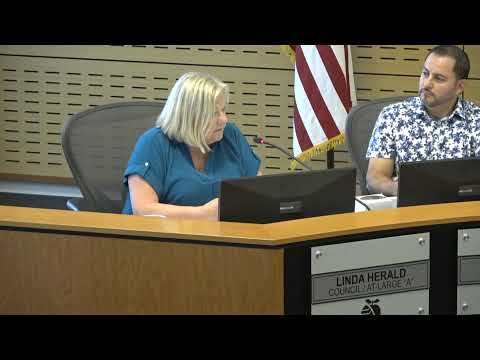
Wenatchee council authorizes eminent domain for Confluence Parkway South after contested hearing
Summary
After a public hearing in which business owners raised concerns about timing, compensation and property impacts, the Wenatchee City Council voted to adopt Ordinance 2024-09 authorizing the use of eminent domain for the Confluence Parkway South project to meet federal funding deadlines.
The Wenatchee City Council voted to adopt Ordinance 2024-09 authorizing the city to acquire property by eminent domain along North Miller Street and Holly Street for the Confluence Parkway South project.
City Engineer Jake Luing framed the project as a multi-phase corridor intended to relieve congestion on SR 285 and improve multimodal access, saying the completed parkway is projected to “take over 16,000 vehicles off of SR 285” and will include three major bridges, separated railroad crossings and new sidewalks and bike lanes. Luing said Confluence Parkway South received environmental clearance in September 2023 and the city must begin construction in spring to meet a funding deadline and complete work by November 2027.
Kenneth Williams, the city’s special counsel on right-of-way acquisitions, told the council that the eminent-domain process includes independent appraisals, relocation benefits and judicial review. Williams emphasized that the process “is designed to protect individual property owners” and stressed that “you do have to pay just compensation.” He also warned the council that without timely property acquisition the city risks losing roughly $175,000,000 in grant funding tied to the project.
Several local business owners and property stakeholders spoke against the alignment or the timetable. Jeff Tontini, a Wenatchee business owner whose family property could be affected, said the drawn-out timeline and shifting offer dates put owners under pressure: “This particular building my father has was 30 years or longer. I was gonna do 30 years. Right? Probably pass it on my children. … So to me, this is a loss of income. Hopefully, I will be compensated fairly for it.” Jimmy Ollman of Earhart Collision Repair said his shop invested about $75,000 in remodeling and called the prospect of relocation “maddening.” Rob Borst, who said he has 44 years in construction, questioned why the alignment was offset from the existing roadway and argued the chosen shift caused unnecessary property impacts.
The council debated environmental and business impacts during a period of public comment and council discussion. One member said she could not support moving forward given concerns about process and local effects; another said the project is important and asked whether relocation and reestablishment costs would be covered. Williams explained that relocation assistance under federal and state rules can include up to $50,000 for business reestablishment expenses and unlimited move costs for eligible items, but that lost income is not recoverable in just-compensation awards.
After discussion, a motion to adopt the ordinance was called and the clerk read the tally as shown in the official record; the motion was declared carried.
Next steps: city staff said offers to property owners will be issued in coming weeks under the established right-of-way process, the right-of-way team will continue voluntary negotiations and the city may pursue possession-and-use or court filings if required to meet federal obligation deadlines.