Get AI Briefings, Transcripts & Alerts on Local & National Government Meetings — Forever.
Committee advances child‑care bills, weighing ongoing funding, workforce priorities and wait‑list relief
Summary
In afternoon work sessions the committee discussed and moved multiple child‑care bills (LD 1414, LD 1955, LD 1728, LD 2066). Members voted to report several bills 'ought to pass as amended' pending fiscal note fixes; advocates urged ongoing funding to clear wait lists and to prioritize child‑care workers for subsidy access.
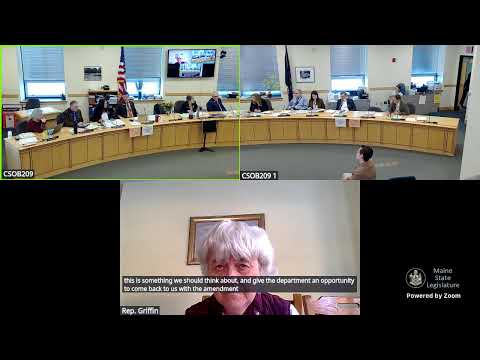
The Joint Standing Committee on Health and Human Services spent the afternoon in work sessions on a suite of child‑care bills that aim to expand availability, address infant/toddler shortages, and support the child‑care workforce.
Among the measures discussed were LD 1414, a bill to establish grants and permit a higher CCAP reimbursement differential for infant and toddler care (sponsor materials estimated a 20% differential would cost about $1.56 million); LD 1955, a carryover bill that includes a $15 million second‑year appropriation for the Child Care Affordability Program; LD 1728, a technical package to codify federal payment and cost protections into state statute; and LD 2066, which would establish the Child Care Employment Award and provide ongoing funding (sponsor language proposed $3 million per year starting in fiscal year 2026‑27) to cover subsidized tuition for children of providers and to support retention.
Senate President Maddie Daughtry, speaking for proponents, said advocates requested switching some one‑time funding to an ongoing appropriation so families and providers could rely on stable support. "The number one thing we need to do is clear the wait list," Daughtry said. Office of Child and Family Services Director Bobbie Johnson told the committee that clearing the families currently on the CCAP wait list would require an estimated $8 million–$10 million, not including future new applicants.
Committee members debated fiscal tradeoffs, federal rules governing CCAP, and program design. Heather Martin, co‑executive director of the Maine Association for the Education of Young Children, supported prioritizing child‑care workers for subsidy access as a workforce retention tool. Department staff noted some provisions would trigger fiscal notes (for example, adding automatic waiver populations or broadening must‑language) and recommended leaving discretionary language ("may" or "subject to available funds") where possible to avoid unanticipated costs.
Roll calls and show‑of‑hands produced procedural movements: the committee moved LD 1414 and LD 1955 "ought to pass as amended," and also moved LD 1728 and LD 2066 forward with amendments and additional technical edits to fiscal notes. Several motions included instructions for department and staff to return with precise fiscal estimates and language review before final reporting.
Next steps: The committee will refine amendments and fiscal notes and reconvene for amendment review and possible reconsideration to ensure appropriations and statutory language align with federal rules and department capacity.