
Taos County commissioners find Torres Pit asphalt operations were not abandoned, allow plant to continue as nonconforming use
Get AI-powered insights, summaries, and transcripts
Subscribe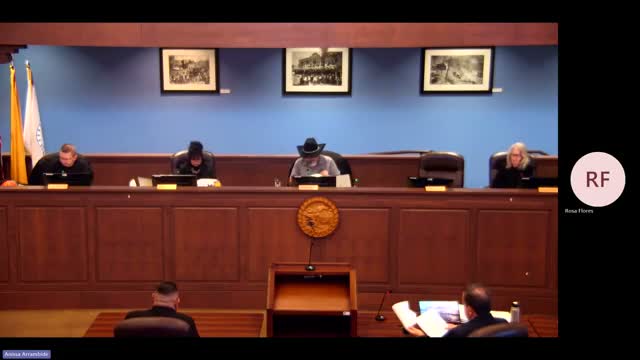
Summary
After a court remand asking the county to determine whether asphalt production at the Torres Pit was a continuous nonconforming use, the Taos County Board of County Commissioners heard argument, testimony and public comment and voted that the plant was not intentionally abandoned and may continue as a legal nonconforming use.
The Taos County Board of County Commissioners voted after public testimony and lawyer argument that asphalt production at the Torres Pit has not been intentionally abandoned and therefore may continue as a legal nonconforming use.
The decision followed an 8th Judicial District Court remand directing the commission to make a specific finding on whether asphalt production at the Torres Pit constituted "continuous use" under Taos County land use regulations. County attorney Mr. Trujillo told the board the court’s order limited the remand to that single factual determination and gave the board the option to decide on the administrative record or to accept new evidence.
Aaron Whiteley, attorney for the Stagecoach Hills Neighborhood Association, argued the record shows gaps in asphalt production at the site and that intermittent operations did not meet the county’s uninterrupted/continuous standard. "The relevant inquiry is not whether the asphalt use is incidental, but whether it was a continuous lawful use prior to the enactment of the land use regulations," Whiteley said, urging the board to treat the 2009 and later activity as insufficient to avoid abandonment.
Taos Grama Products’ counsel and company witness Damon DeVoe countered that the company maintained continuous occupancy and related operations at Torres, stored materials and mobilized portable asphalt plants to the site for projects in 2009, 2019 and 2022–2023. "We always intended to return mobile plants to the property for future projects in Taos County as it required," DeVoe said, describing a long-term lease and repeated mobilizations and demobilizations.
Residents testifying under oath pressed the board on health, nuisance and permit issues. Alicia Baumhoff told commissioners she sometimes "woke up to the stench of asphalt in the morning" and said the plant’s 2025 activity had caused air-quality and health concerns in nearby neighborhoods. Several other speakers — including Diane Erickson, Bruce Marshall, Leandra Tafoya and Hannah Madison — described episodic operation, strong odors and respiratory symptoms. Nicholas Armijo and other neighbors said they had not observed continuous production at the Torres site in prior years and raised concerns about permit compliance and notice.
After cross-examination and a short executive-session deliberation, Commissioner Romero moved that the board had made the factual determination that asphalt production at Torres had not been intentionally abandoned and therefore should be allowed to continue as a legal nonconforming use. The motion was recorded as passing by roll call.
What the decision means going forward: the commission recorded a factual determination on the narrow issue the district court remanded. The district court’s order gave the commission discretion to rely on the administrative record or receive new evidence; the board heard new testimony and made an affirmative factual finding. The record shows the board considered both the timing of past asphalt mobilizations and evidence of ongoing leases, stockpiles and business intent.
The case remains tied to the remand language from Judge Chavez and local land-use standards. Members of the public and appellants emphasized health, permit compliance and the narrowness of the remand; the board’s determination addresses continuity and abandonment under county regulations rather than a broader permitting or special-use process.
The board’s determination occurred after a public hearing and may be subject to further administrative or judicial review consistent with the appellate and remand procedures in the record.