Norman council sends $8 million homeless shelter bond to April ballot after extended debate
Loading...
Summary
Council voted to place a $8 million general obligation bond on the April 7 special-election ballot to fund a proposed permanent homeless shelter on a 3-acre site south of the existing temporary shelter; supporters emphasized capacity and continuity, while neighbors pressed for clearer assumptions about spillover, operations and timing.
Council voted unanimously Jan. 27 to send to voters a proposal authorizing up to $8 million in general obligation bonds to construct a permanent homeless shelter on land the city purchased south of the existing Food & Shelter facility.
City staff said the project would be a purpose-built, low-barrier facility designed for roughly 100 overnight guests. Jason Olsen, director of parks and facilities, described a two-building concept totaling about 21,000 square feet that would include separated men’s and women’s dorms, family units, respite/medical rooms and program and intake space. "We are designing this to shelter about a 100 guests," Olsen said during the presentation.
City Attorney Catherine Walker said the bond request is presented as a 20-year general obligation issue and that the ordinance identifies the use of proceeds for a homeless-shelter community facility. "Shall the city incur an indebtedness of $8,000,000 for a homeless shelter community facility?" Walker said as she previewed the ballot language. Staff estimates construction costs of roughly $6 million and included financing, owner contingency and soft costs within the $8 million cap.
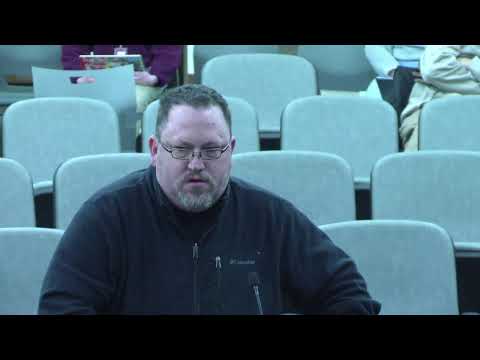
Council and members of the public engaged in lengthy discussion about operations, neighborhood impacts and timing. Evan Taylor, who lives in the neighborhood immediately west of the site, urged council to record and make explicit the planning assumptions the city and operator will rely on and to specify how the city will respond if those assumptions do not hold. "My request tonight is simple: as this process continues ... be clear on your record about what assumptions are being relied on and how the city plans to respond if they don't hold in practice," Taylor said.
Supporters, including council members and public speakers, said the city has repeatedly tried to find nonprofit-led permanent solutions and that private operators lack capacity. Rob Norman, a longtime community advocate, praised council for sending the question to voters rather than acting unilaterally. "You're putting it to a vote of the people," he said.
Staff said CityCare is the intended operator and will seek grants and philanthropic funding to offset operating costs; CityCare currently runs the interim shelter. Walker said an operator contract and community mitigation measures (security, maintenance, neighborhood coordination) will be negotiated before any transition. Council members and staff committed to continuing neighborhood outreach and to exploring short-term options to avoid interruption of services at the existing site while the new facility is designed and built.
Timing and cost control were discussed at length. Olsen said the conceptual schedule would require roughly 90 days to contract design and about 12–18 months for construction once design and procurement are complete. He said the owner contingency in the budget and the use of prefabricated metal building components are intended to control schedule and cost. "We think we can do this in about 18 months," Olsen said; staff added that bids would lock the price when received.
The ordinance adopting the bond measure and the companion election resolution were adopted by the council, which then voted to place the question on the April 7, 2026 special-election ballot. If approved by voters, the city will proceed with design and construction per the plan and operating negotiations.
The council also emphasized that any public funds used to build or operate the shelter would be subject to city audit and external financial review.
Next steps: the bond question will appear on the April 7 ballot; staff will finalize design documents, negotiate an operator agreement and continue neighborhood engagement if voters approve the measure.