Get Full Government Meeting Transcripts, Videos, & Alerts Forever!
Get email alerts on the Land Use Solar Farms topic
No spam. Unsubscribe anytime.
Residents urge Northampton County to address smoke, tree clearing tied to solar developments
Summary
Multiple residents told the Northampton County Board of Commissioners they are suffering daily smoke and increased flooding tied to clearing for solar-panel fields, asking the county to enforce a moratorium, provide answers to outstanding questions and meet with economic development staff.
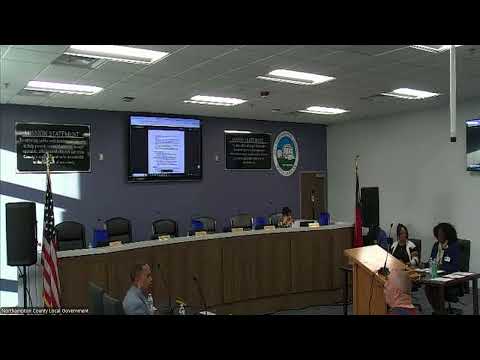
Several residents told the Northampton County Board of Commissioners they are experiencing daily smoke and environmental disruption from land clearing tied to large solar developments and urged the board to act.
At a public-comment period on the rezoning and other business, a resident said smoke on recent mornings was so heavy she told a family member with respiratory illness to stay inside. The speaker said she had previously submitted written questions and had not received written answers and estimated "close to 8,000 acres" have been acquired for solar panels and are being cleared and burned daily.
Richie Harding and other speakers also said widespread tree cutting for solar farms harms tourism and increases flooding. Harding described trips to other counties with preserved trees and suggested Northampton County could pursue nature-based tourism if tree loss were limited.
Commissioners did not adopt new regulatory action during the meeting. The chair invited affected residents to schedule a meeting with county economic-development staff and the county manager to discuss the moratorium on solar fields and related concerns; staff said any meeting involving more than two commissioners would require a posted special-called meeting. County staff and the chair committed to follow up in writing as requested.
The board’s public-comment rules were restated at the meeting: speakers have five minutes, the board will not engage in dialogue during individual public comments, and written or oral follow-up may be provided afterward.
Next procedural step: residents were told staff would accept appointment requests and that the topic could be scheduled for future agenda review; one commissioner suggested tabling related agenda proposals until the board had more information.