
Parkrose board warns $4.8 million shortfall as special-education costs soar
Get AI-powered insights, summaries, and transcripts
Subscribe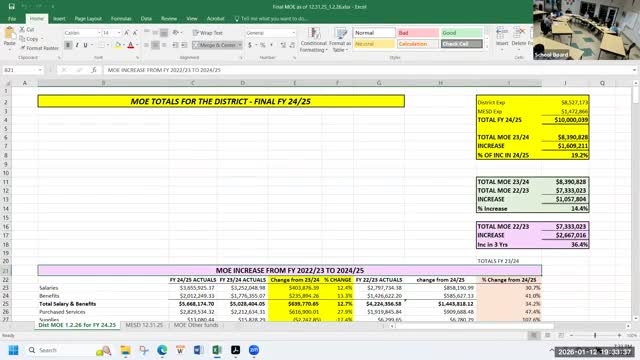
Summary
District finance staff told the Parkrose SD 3 board that rising special-education enrollment and costly outplacements have driven a projected roughly $4.8 million budget shortfall for the coming fiscal year, with federal IDEA funds covering an estimated 4% of those costs.
Sherry (district staff) told the Parkrose SD 3 board on Jan. 12 that special-education costs are one of the primary drivers of a growing budget gap and that the district is facing a preliminary projected shortfall of about $4,800,000 for the next fiscal year.
Sherry presented recent fiscal figures and said the district spent roughly $10,000,000 on special education in fiscal year 2024–25 out of a roughly $42,000,000 general fund. She said special-education enrollment rose from 413 to 458 students year over year and that outplacement costs have grown sharply: "On any one given day, the average cost of those outplaced service kids is about $74 to $75,000 a kid," she said. Sherry also said federal IDEA funding to the district was roughly $404,000 — about 4% of the cost that federal law intended to cover.
The presentation traced multiple causes: a larger number of students qualifying for special education, more students in high-cost placements and transportation, limited state reimbursement for high-cost disabilities (Sherry projected a return on those dollars near 30¢ on the dollar this year), and enrollment declines that reduce per-student revenue. Sherry said the district’s beginning fund balance was lower than budgeted at audit close — roughly $1.1–$1.2 million rather than the $3.3 million used in planning — and that the district had frozen nonessential spending in January to preserve cash.
Board members pressed for continued conservative budget planning and noted that the upcoming short legislative session is unlikely to deliver major new revenue. The board’s conversation also highlighted the district’s limited ability to bill higher levels of state or federal support: "We do not receive the dollars back," Sherry said of high-cost disability reimbursements, noting that federal IDEA has never fully funded IDEA obligations.
The superintendent and finance staff said they will continue to report monthly financials to the board and bring any proposed cuts or budget decisions to future meetings. The board did not take any formal vote on cuts at the Jan. 12 work session; the presentation was informational and intended to guide forthcoming budget deliberations and potential ballot options.