
Flagler County opens Chapter 164 dispute process with Flagler Beach over Summertown annexation; vote 4–1
Get AI-powered insights, summaries, and transcripts
Subscribe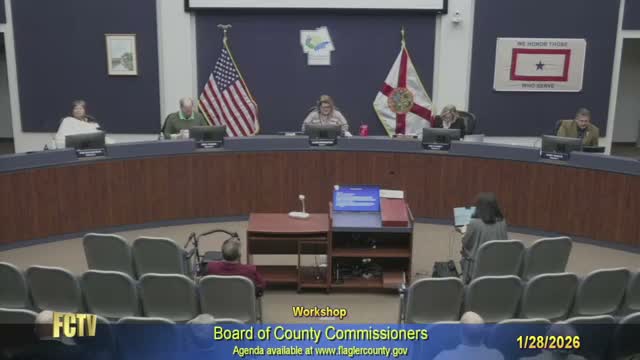
Summary
Flagler County commissioners voted 4–1 on Jan. 28 to invoke the state's Chapter 164 intergovernmental dispute-resolution process with the City of Flagler Beach over the Summertown comprehensive-plan amendment, citing concerns about reclaimed-water obligations, coastal floodplain effects and traffic impacts on John Anderson Highway.
Flagler County commissioners voted on Jan. 28 to initiate intergovernmental conflict-resolution proceedings under the Florida Governmental Conflict Resolution Act (Chapter 164, Florida Statutes) with the City of Flagler Beach over the city's Jan. 8 adoption of a comprehensive plan amendment for the Summertown annexation.
County Attorney Rodriguez told the Board that Chapter 164 requires the initiating government to adopt a resolution listing the issues to be discussed in a joint meeting and that the process can lead to mediation and, only if an impasse remains, litigation. "The first step is a meeting between, by the initiating body to adopt a resolution, which lays out the issues that are gonna be discussed at a future meeting between the two governing bodies," Rodriguez said during the workshop portion of the meeting.
Why it matters: Commissioners said the Summertown amendment could increase residential density in areas that touch the county's evacuation corridor and a county-maintained road, John Anderson Highway, potentially affecting evacuation timing and long-term maintenance burdens on the county. Commissioners also cited concerns about whether the city and developer have honored a prior settlement agreement that assigned responsibility for a reclaimed-water facility.
Key issues raised - Reclaimed-water obligation: Sarah Spector, Assistant County Attorney, said the original settlement agreement assigns reclaimed-water responsibility to the city while the developer was to build the facility, but the county believes a 2022 utility agreement and later city actions effectively left the county exposed. "The settlement agreement itself still controls reclaimed water," Spector said, adding that the developer has installed distribution piping but has not built the reclamation plant. - Floodplain and coastal high-hazard area: County planners said a small portion of the Summertown property intersects a coastal high-hazard designation and recommended that the city show how the amendment evaluated evacuation timing and flood risks. Adam Mangle, Flagler County growth management director, said the county's identification of acquisition areas could align with state programs such as Florida Forever and urged coordinated application and support. - Traffic and John Anderson Highway: Commissioners, residents and planners pressed for the traffic-impact material cited in the applicant's MPD. County staff said a high-level traffic memo is typical at the plan-amendment stage and that detailed Transportation Impact Analyses (TIAs) come later; commissioners want the city and developer to make mitigation measures and timing for Spine Road construction clear to the county. - Road maintenance and funding: Staff presented options including a city takeover of the affected portion of John Anderson, developer-funded commitments, impact-fee arrangements (limited by statute to capital uses), or a maintenance interlocal with a community development district that could collect non-ad valorem assessments for maintenance and operations.
Public and private reactions - Bruce Smith, City Attorney for Flagler Beach, urged the county to identify a precise legal deficiency before pursuing litigation. "We should file suit first and then initiate in order to preserve our rights" was a cautionary paraphrase offered by the county attorney; Smith argued the county needs a good-faith basis for court action and pushed for clearer legal claims from the county. - Developer Ken Belcher and counsel said the project's traffic study has been part of the record, that negotiations and staff conversations have occurred for years, and that the project could eventually yield large tax valuation. Belcher told the Board the traffic study cost about $250,000 and said the full project could generate roughly $2 billion in tax base over time. - Multiple residents and local preservation groups urged enforcement of the settlement agreement, better flood and drainage protections, and clearer answers on traffic and emergency access.
Board action and next steps The Board passed the resolution to initiate the Chapter 164 process and authorized the county attorney to seek an agreement with Flagler Beach to extend (toll) the jurisdictional filing deadline so that no lawsuit would be filed while the dispute-resolution steps proceed. Under the motion's language, the county will request a joint meeting within 60 days; if the parties reach an impasse, the proposed tolling arrangement would allow a legal challenge to be filed 20 days after an impasse rather than on the statutory 30-day countdown from adoption. Commissioner Carney moved the resolution; Commissioner Richardson seconded.
Vote (roll call): Commissioner Richardson ' Yes; Commissioner Hansen ' No; Commissioner Carney ' Yes; Commissioner Dantz ' Yes; Chair Pennington ' Yes. Outcome: approved, 4'1.
What happens now: Staff and the county attorney said the county will send the Chapter 164 notice letter to Flagler Beach within five days of the resolution, request scheduling for a joint meeting within 60 days and seek an intergovernmental agreement to extend jurisdictional deadlines. County staff and the developer said they remain willing to meet and negotiate; members of the public urged swift, cooperative action to avoid protracted litigation.
Context and constraints: County attorneys repeatedly said invoking Chapter 164 is a statutory dispute-resolution pathway, not an automatic step into litigation. Several speakers warned that any litigation under the county's other statutory challenge authority (discussed in the meeting as Section 163.3215) carries mandatory prevailing-party attorney-fee exposure and other legal risks.
The Board adjourned after the vote; staff said it will return with the proposed notice letter and, if necessary, next steps for scheduling the joint meeting and any follow-up materials the commissioners request.