Get Full Government Meeting Transcripts, Videos, & Alerts Forever!
Get email alerts on the Privacy Law Enforcement topic
No spam. Unsubscribe anytime.
Assembly passes restriction on interstate ALPR data access after contested debate over reproductive‑health and trafficking
Summary
The Assembly approved a bill limiting interstate access to automated license plate reader (ALPR) data in inquiries tied to reproductive‑health services after extensive floor argument. Supporters framed it as protecting privacy and reproductive freedom; opponents said it could hinder human‑trafficking and other criminal investigations.
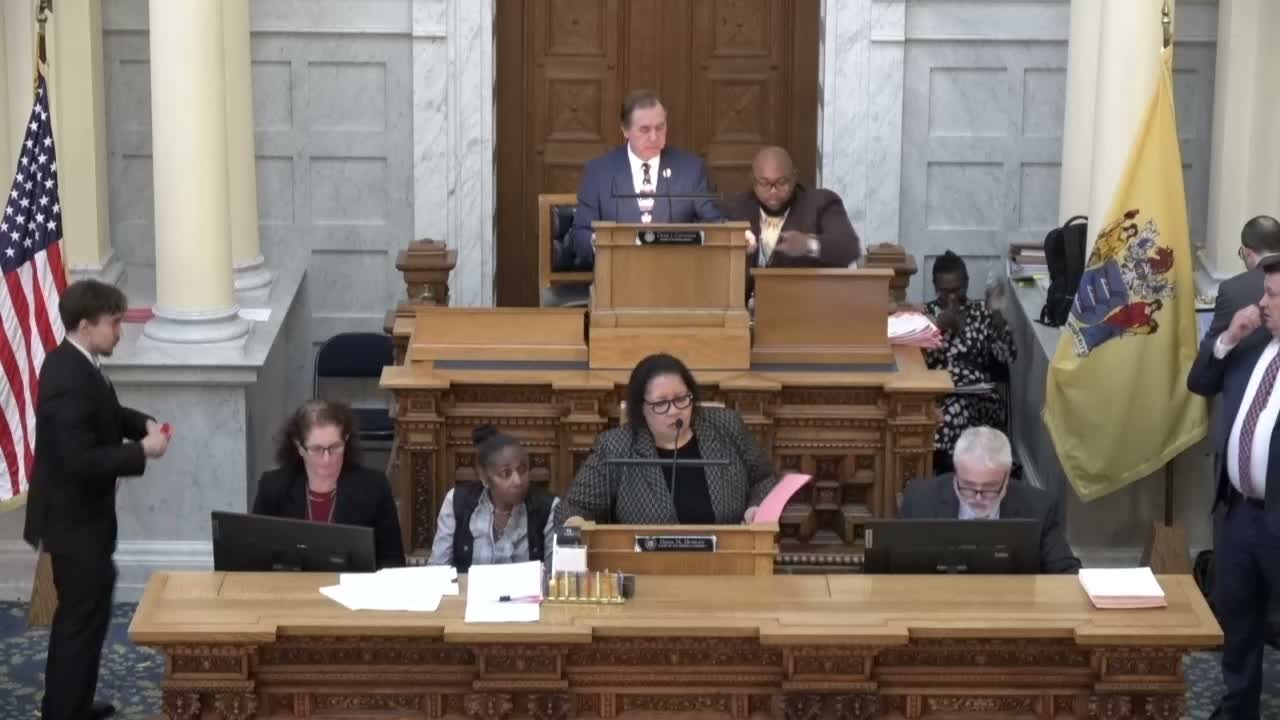
The Assembly passed a measure (identified in the transcript as Assembly/Senate bill 5907) that narrows out‑of‑state access to New Jersey automated license plate reader (ALPR) data for investigations tied to reproductive‑health services, setting off a lengthy floor debate on privacy, law‑enforcement tools and human trafficking.
Assemblywoman Droolus introduced the bill and said it is intended to prevent New Jersey’s data from being used to facilitate enforcement actions against people lawfully seeking reproductive health care here. "We have been sharing automated license plate reader information for interstate investigations concerning reproductive health care services that are legal in New Jersey," she said on the floor, presenting the bill's rationale.
Opponents disputed the premise and warned the bill could create investigative blind spots. Multiple members recounted committee testimony from human‑trafficking survivors and law enforcement expressing concern that restricting data sharing could impede investigations into trafficking and cross‑border crimes. A survivor‑witness whose committee testimony the floor recited, Jean Marie Davis, described being trafficked across multiple states and said limiting interstate ALPR cooperation could make tracking traffickers harder.
Members debated whether the bill primarily addresses reproductive rights or public‑safety tools; law‑enforcement groups raised objections at committee, and several lawmakers urged an amendment to exempt criminal investigations, especially human‑trafficking cases. Some colleagues urged tabling or shelving the bill until those concerns were addressed; others said the bill protects personal privacy and prevents out‑of‑state enforcement from obstructing access to health care.
On a recorded tally reported on the floor, the Assembly approved the measure (final reported tally in the transcript: 50 yes, 22 no). The bill's supporters described the vote as a measure to protect constitutional rights and privacy when people come to New Jersey for lawful medical care; opponents said they will seek amendments or clarifications in subsequent steps to preserve law‑enforcement capacity in complex criminal cases.
Why it matters: The law alters how New Jersey shares ALPR data across state lines, a practice used in investigations ranging from human trafficking to stolen‑vehicle enforcement. Supporters argue the change is necessary to protect privacy and access to legal reproductive‑health services; critics call for carve‑outs for criminal investigations.
What's next: With Assembly passage, sponsors and opponents signaled possible follow‑up work on exemptions, implementation protocols, and law‑enforcement procedures as the bill moves through the legislative process.