Get Full Government Meeting Transcripts, Videos, & Alerts Forever!
Get email alerts on the Votes Roundup topic
No spam. Unsubscribe anytime.
Senate session: dozens of third‑reading bills passed, from aquaculture grants to veterans and public‑safety measures
Summary
The New Jersey Senate moved and passed a large package of third‑reading bills by voice and roll-call votes, including S216 (aquaculture promotion, $25,000), S261 (community cats fund), and numerous substituted Assembly bills. Many measures passed unanimously or by large margins.
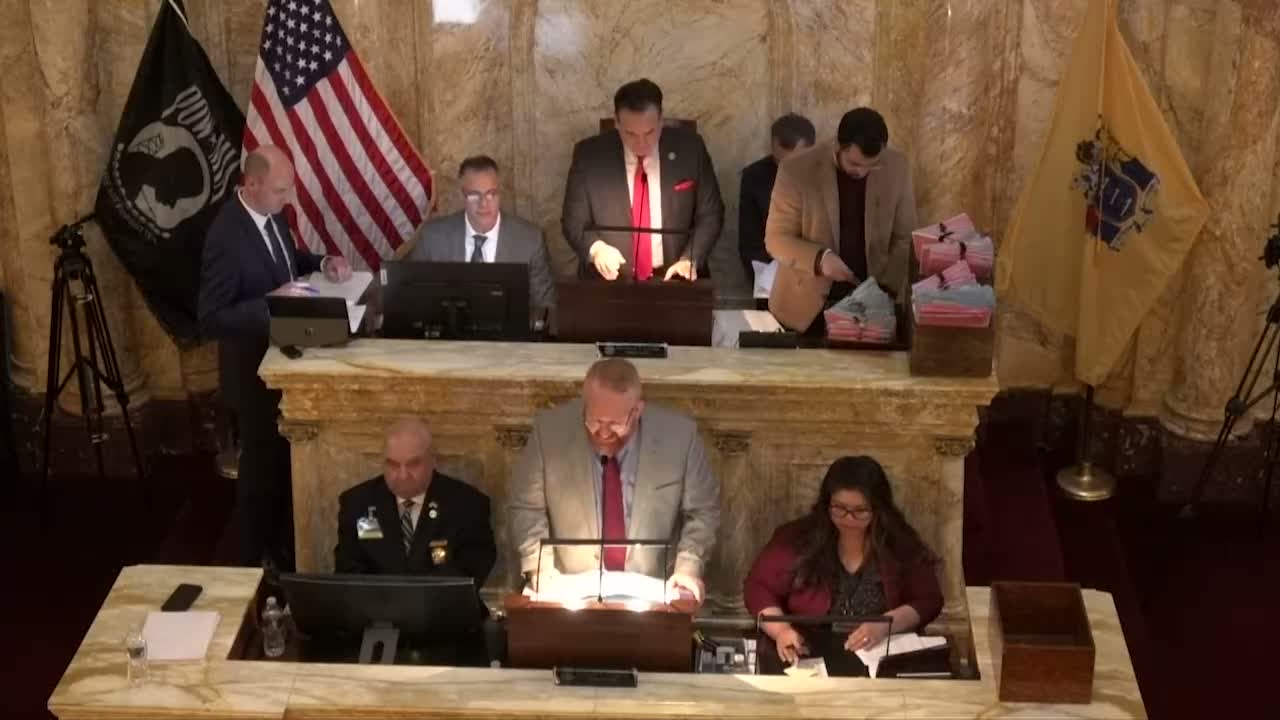
The New Jersey Senate advanced a broad slate of legislation during a lengthy floor session, approving dozens of bills on third reading across agriculture, public safety, health, education and appropriations.
Notable items adopted on third reading included S216, which directs the Department of Agriculture to advertise state aquaculture products through a Jersey Fresh-branded program and establishes an annual $25,000 appropriation; Senators Smith and Greenstein moved and the bill passed with recorded support (30-0). S261, the Compassion for Community Cats Law (Senator Stack), passed with a 30-0 tally and establishes spay/neuter requirements and a dedicated fund. Numerous other bills also passed by recorded vote or unanimous consent, including measures on veterans' services, municipal utility regulation, municipal pool safety, adjustments to workers' compensation valuation, and a state Parkinson's disease registry.
The floor also handled many Assembly-to-Senate substitutions under Senate Rule 17 and passed a string of substituted Assembly bills on third reading, covering topics from anti-trafficking driver training and marriage officiation by deputy clerks to workforce and licensure changes. The Senate confirmed a nomination for the State Board of Education (Mary Mary Bennett) by a 23-13 vote and waived the chamber's 30-bill limit by voice vote.
What happens next: Bills that passed third reading continue through their statutory paths, which may include reconciliation with Assembly text (where substitutions occurred), committee follow-ups, appropriation line items for funded programs, and the governor's consideration.