Get Full Government Meeting Transcripts, Videos, & Alerts Forever!
Get email alerts on the Behavioral Health Minors Consent topic
No spam. Unsubscribe anytime.
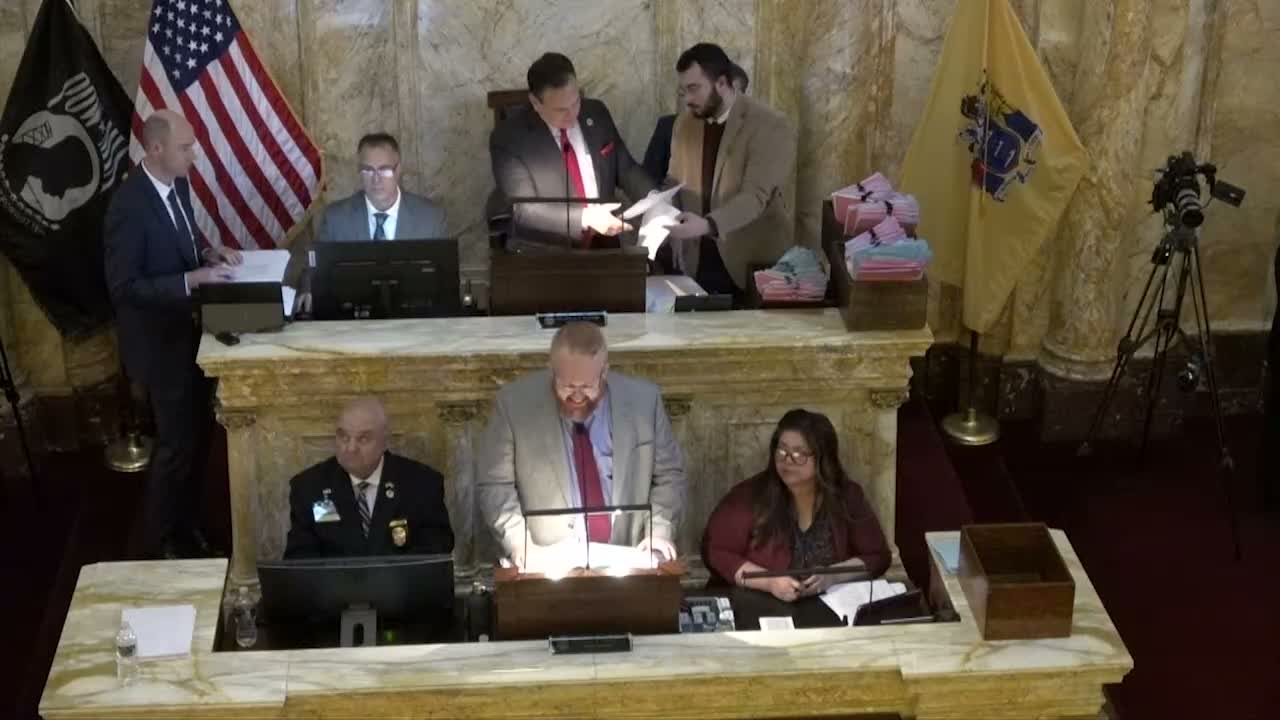
Senate approves bill lowering minors' consent age for behavioral health care after debate, tables amendment
Summary
The New Jersey Senate passed S1188 (with companion S1970), lowering the age at which minors may consent to behavioral health care from 16 to 14 after a contested floor debate and a successful motion to table an amendment meant to ensure parental involvement.
The New Jersey Senate on the floor passed S1188 (and companion S1970), a bill to lower the age at which minors may consent to behavioral health care from 16 to 14, following a heated debate about parental notification and child safety.
Senator Pinacchio argued against the bill, saying it would reduce parental involvement at a time when families can be crucial supports for at-risk youth. "Imagine a 14 year old child who may be suicidal. Why on earth would you deny parents the right to know that?" he said, warning that the change could "put those children in harm's way." Senator Pinacchio traced his concerns to past reforms that expanded kinship care and said parental awareness is often necessary for successful treatment.
Senator Testa offered an amendment aimed at preserving timely access to behavioral health services for minors while ensuring families are not "left in the dark when their child is struggling," calling the change "a responsible and compassionate balance." Testa said the amendment would maintain protections where parental involvement might present risks but otherwise require some form of family notification or involvement.
Majority Leader Ruiz moved to table Testa's amendment. The motion to table carried on a roll-call tally of 21 in favor and 14 opposed. After the tabled amendment, the Senate proceeded to vote on the bill itself; the Senate recorded the bill as passed by an affirmative tally of 21 and 14 negative votes.
The debate and amendment activity unfolded under Senate rules invoked on the floor; members repeatedly framed the issue as a balance between immediate access to care for adolescents and parental engagement in treatment. The Senate did not adopt Testa's amendment on the floor after the motion to table.
What happens next: With passage in the Senate, the measure moves on the legislative process for reconsideration by any required additional steps (conference, reconciliation with Assembly language, or governor's action) according to standard procedure. The record on the floor shows both concern and support for expanding minor access to behavioral health services while preserving protections where parental notification could be harmful.