Get Full Government Meeting Transcripts, Videos, & Alerts Forever!
Get email alerts on the Public Safety topic
No spam. Unsubscribe anytime.
Multiple Alamance County fire districts ask for tax increases as costs rise
Summary
Six of 12 fire districts told commissioners they need tax‑rate increases to cover vehicle financing, station repairs and staffing shortages. Chiefs cited rising equipment costs, difficulty recruiting volunteers, and requests ranging from fractional pennies up to several cents.
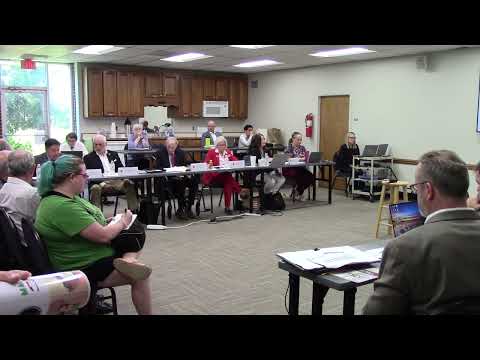
Several Alamance County fire chiefs told commissioners during a work session that operating costs, vehicle payments and staffing pressures are driving requests for modest tax‑rate increases.
Chiefs said parts, vehicles and construction costs have climbed sharply. "We bought one in April '22, $724,000. That same truck now at $4,100,000," one chief said while describing current equipment financing and monthly payments. Another representative said a proposed new station carries an estimated $4.3 million construction price and would create annual debt service in the $270,000–$300,000 range.
Department leaders emphasized persistent recruitment and retention challenges: volunteers are harder to find, training requirements and continuing‑education hours are high, and some districts lack full‑time staff. Chiefs described using a mix of refurbished apparatus and short‑term financing to stretch budgets.
Individual district requests varied: presenters described increases framed as pennies on the tax rate (examples given in testimony included 0.017¢ and 1¢ increments for specific districts and a 3¢ request mentioned by one speaker).
Commissioners asked for clarifying details (full‑time vs. part‑time counts, expected annual debt service, and training costs) and asked staff to provide trend and comparative analyses before voting. Several chiefs invited commissioners to tour cramped stations to see storage and operational constraints firsthand.
No formal vote was taken; staff will return with additional financial scenarios before any budget ordinance or tax‑rate change is adopted.