Get Full Government Meeting Transcripts, Videos, & Alerts Forever!
Get email alerts on the Perkins Airfield topic
No spam. Unsubscribe anytime.
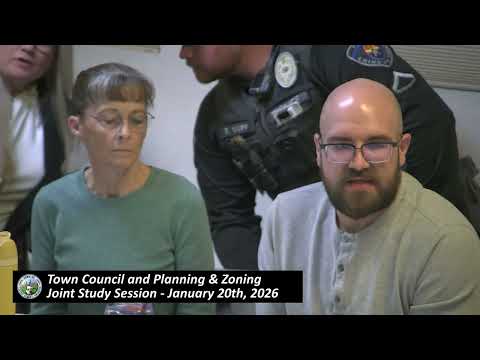
Perkins family and Embry Riddle outline private airfield plan near Chino Valley; council to consider rezoning
Summary
Perkins Ranch and Embry Riddle presented plans for a private airfield on Perkinsville Road featuring a 5,000‑foot runway in Phase 1, capped hourly operations and private funding commitments; the Town Council and Planning & Zoning Commission heard technical details, community concerns about noise and roads, and agreed to consider rezoning and a CUP at future hearings.
Tom Perkins, president of Perkins Ranch Inc., told a joint session of the Chino Valley Town Council and Planning & Zoning Commission that his family proposes to build a private airfield on Perkinsville Road, beginning with a runway in Phase 1 that the team described as “a 5,000 by 70 foot, 5 foot runway.” The presentation said flight operations could begin in late 2026 or early 2027 after construction and permitting, and that early capital costs for Phase 1 are expected to be about $15,000,000, paid by the Perkins family and project partners rather than the town.
The proposal seeks a zoning change to AR‑36 and a conditional use permit (CUP). Staff explained AR‑36’s purpose under the town’s 2040 general plan and noted that airports were added as a conditional use to permit case‑by‑case council review. The project team — including representatives from Embry Riddle — walked commissioners and council members through site maps, phased development, airspace, noise contours and proposed mitigation.
Why it matters: town leaders and residents raised questions about noise, traffic on Perkinsville Road, public safety and long‑term controls on the airfield’s size and use. Supporters said the project could bring aviation training jobs and a research campus, while opponents asked for enforceable limits in the CUP or development agreement to protect nearby homes, wildlife and public resources.
What the applicants told the council: the team said Phase 1 would be focused on training aircraft (for example, Cessna 172s) with later phases adding longer runway length, hangars and a research/innovation campus. Presenter Ken Witcher of Embry Riddle described the model used at other campuses and cited local hiring and internship examples, saying the research campus approach had delivered external funding and “the average salary is about 65 k a piece” at a comparable site. Tom Perkins read a letter from Rodney Cruz, identified in the letter as chief operating officer, offering local vendors “immediate preferred vendor status” in bid processes to involve Chino Valley contractors early.
Operations and monitoring: the applicants proposed an operating metric described as “20 takeoff and 20 landings, max per hour average,” which the team equated to 40 operations per hour on a max average basis and used to estimate daily totals. The team said aircraft would use ADS‑B tracking and that data could be audited if residents report concerns; commissioners asked for a monitoring plan and more frequent early reporting (one commissioner requested weekly checks during the first year, then quarterly or semiannual reporting).
Public safety, roads and fire protection: presenters said the Perkins family would donate land for a fire station and would fund capital for facilities; they asserted that operational staffing and long‑term service costs would fall to the fire authority and the town. Commissioners pressed for clarity on whether CAFMA tax funds would be used and for contractual guarantees that road impacts from construction would be mitigated. The applicants said some road improvements would be expected in later phases and that the development agreement (rather than the CUP alone) is the appropriate place to spell out construction‑period obligations.
Noise and community concerns: the presentation included noise contours showing a 65 dB contour near the field and comparison metrics; the team said demonstration flights measured roughly 60–65 dB at some observation points. Multiple speakers from the council and commission voiced divided views: some highlighted potential economic development and workforce benefits, others asked for firm restrictions on aircraft type, hours of operation and enforceable remedies if conditions are violated. One commissioner told the room, “If we can get all the flights done basically before lunchtime, then that would be real nice,” expressing a desire to limit afternoon or evening operations.
Limits and private status: the applicants said the airfield would be private — landowner permission would be required for access — and noted that runway length and site constraints make major expansion difficult; designers indicated a practical cap near 6,000 feet and the team said they would accept explicit runway‑length limits in permit conditions if the town required them.
Next steps: no formal vote or final decision was taken at the meeting. Staff told members that zoning change and CUP items will return on February 3 for separate actions and recommended including a development agreement and specific conditions as part of any approval path. The council closed the joint session after reserving future hearings to consider rezoning, CUP terms, monitoring, road improvements and fire‑service arrangements.