Chino Valley council reviews budget options as state revenue threats loom

Chino Valley Town Council · January 27, 2026

Loading...

AI-Generated Content: All content on this page was generated by AI to highlight key points from the meeting. For complete details and context, we recommend watching the full video. so we can fix them.

Summary

At a budget workshop, Chino Valley staff laid out hard choices tied to heavy reliance on transaction privilege tax (TPT), presenting operating-reduction scenarios and one-time capital trade-offs while seeking council priorities on roads, water and economic development.

Chino Valley leaders convened a multi-department budget workshop to set priorities for the coming fiscal year and to weigh trade-offs between cutting ongoing operating costs and funding one-time capital needs. Staff stressed the town’s dependence on transaction privilege tax (TPT) revenue and warned that pending state proposals could shrink shared revenues, forcing difficult choices.

Staff outlined a timeline for the budget process and said department requests will be finalized over the next two weeks ahead of study sessions in April and a tentative budget adoption in May. Finance staff noted current debt-service payments at just over $2 million annually and urged council members to consider both operating-budget adjustments (options included keeping budgets flat or reducing them by 1%–3%) and supplemental one-time requests for capital priorities.

“Because we don’t have a property tax, TPT is very important to us,” staff said, framing the council’s challenge as a need to balance essential services with investments that support economic growth. Council members repeatedly cited roads, water infrastructure and economic development—particularly business retention and grocery-retention strategies—as competing priorities.

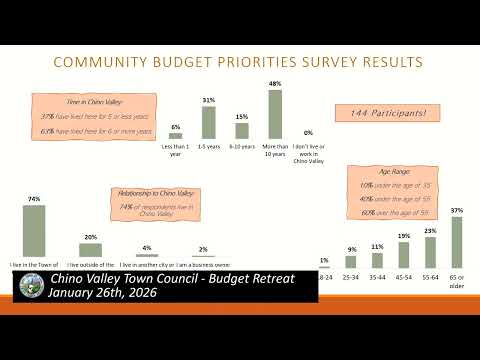
The workshop included presentation of a public survey with 144 respondents, which found business retention/attraction and expanded retail among top priorities. Staff cautioned the sample size was limited but noted consistent qualitative feedback: residents value senior services and expect improved street maintenance.

Staff recommended a cautious approach to multi-year borrowing for design work on water infrastructure until updated master-planning and growth projections are complete. The council directed staff to bring more detailed dollar figures for April meetings and to prepare options that show fiscal impacts of different operating and capital trade-offs.

Next steps: staff will present preliminary dollar figures on April 13, return for additional study on April 27, and hold a tentative budget adoption in May with the final adoption planned for June.