
Simi Valley directs staff to expand outreach, workshops and advocacy on power-shutoff preparedness
Get AI-powered insights, summaries, and transcripts
Subscribe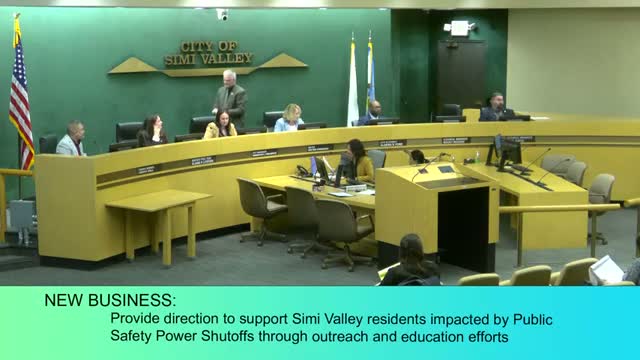
Summary
The City Council unanimously directed staff to broaden outreach and education for residents affected by public safety power shutoffs (PSPS), including hands-on assistance enrolling vulnerable residents in utility programs, exploring battery-backup options and continuing lobbying of utilities and the CPUC.
Simi Valley’s City Council voted unanimously Jan. 27 to expand city efforts helping residents prepare for and respond to public safety power shutoff events.
Deputy City Manager Heather Seemagayse told the council that last year’s PSPS events affected roughly 20 of the city’s 24 electric circuits at peak and an estimated 32,000 customers experienced outages for varying durations. ‘‘When PSPS events affect large portions of the community, residents experienced spoiled food, loss of phone and internet service, traffic interruptions and disruptions to businesses,’’ Seemagayse said during a presentation outlining available utility and state programs, costs for backup power and peer-city practices.
The staff report noted that rebates and programs exist but can be difficult to navigate during an event; portable generators range from about $700 to $3,000, while permanently installed standby generators can exceed $10,000 once installed. Seemagayse recommended expanding city education and neighborhood-targeted outreach, using Edison outage data to identify the most-impacted areas, and coordinating closely with Southern California Edison and local partners.
Council members pressed for practical next steps. Council member Ayala emphasized the need to help seniors and people with disabilities actually complete program applications rather than just receiving information, suggesting hands-on workshops at the senior center: ‘‘...instead of just giving the vulnerable the information, doing more of a hands-on workshop where we have volunteers there to actually help them with the CCBB program,’’ Ayala said.
Council member Rhodes urged a direct outreach plan tied to the next PSPS event, proposing an email blast and sign-up campaign for Edison’s voluntary notification system to increase enrollment. Mayor Pro Tem Litster framed broader advocacy goals: ‘‘We need to be doing more to let [residents] know that we are really gonna fight the fight ... we need to call, constantly, be speaking before SCE and the CPUC.’’
The Council’s direction to staff — passed unanimously — asks for seminars and assistance with application completion, investigation of Clean Power Alliance and battery-backup resources for the most vulnerable, and continued lobbying including leveraging regional and state advocacy partners. Staff indicated the recommendations have no immediate fiscal impact and that follow-up reporting can return to council if required.
What’s next: staff will develop an outreach plan that may include targeted PSAs, workshops at senior facilities, coordinated messaging with SCE and Clean Power Alliance and enhanced lobbying to the California Public Utilities Commission.