Subcommittee advances a slate of bills on telecom, housing, waste diversion and local government
Loading...
Summary
The House subcommittee reported a group of bills spanning wireless infrastructure upgrades, workforce-housing pilot tools, vacant-property registration, EDA financing for affordable housing, composting authority for localities, tourism district options, town charter cleanup and a Halloween curfew fix; most measures were reported unanimously or with clear tallies.
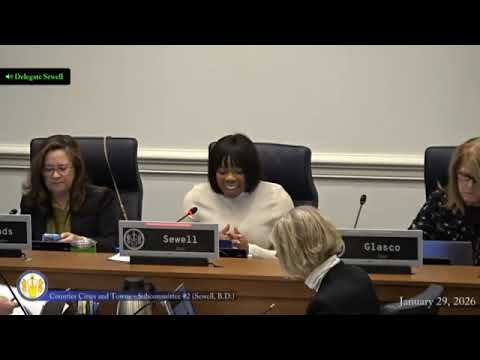
Richmond — At its Jan. 30 session the House subcommittee handled 16 bills, advancing a mix of infrastructure, housing, waste and local-government measures. Below are the major actions and outcomes reported by the committee.
HB 277 (wireless infrastructure): A committee substitute would streamline local review of collocations and routine equipment upgrades, cap fees at administrative costs and set a 60‑day review timeline; trade groups including CTIA and the Wireless Infrastructure Association supported the substitute. The subcommittee reported HB 277 by a recorded vote of 8–0.
HB 11‑30 (workforce housing on surplus land): The bill allows localities or school systems to use excess public property via long‑term leases for workforce housing and sets standards for small starter lots and modular construction; the subcommittee reported the bill 7–1.
HB 802 (vacant-property registration): The bill permits localities to require contact information for owners or registered agents of vacant properties after a period of vacancy to address urban blight and service-of-process issues. Richmond officials supported the change. The subcommittee reported HB 802, 8–0.
HB 806 (EDA bonding for affordable housing): The bill would authorize economic development authorities to issue bonds and loans to finance affordable housing; witnesses described Richmond’s program and growth in affordable units since 2022. The subcommittee reported HB 806, 8–0.
HB 1011 (organic diversion and composting): A permissive bill would allow localities to require large generators (defined in the bill as producing at least one ton of food scraps per week within 30 miles of a permitted composting/disposal facility) to divert organics; the bill directs the Department of Environmental Quality to study statewide composting capacity and PFAS impacts. An amendment to add "anaerobic digester" was adopted; the bill reported 8–0 as amended.
HB 5‑24 (tourism improvement district for Arlington): The bill gives Arlington County an option to establish a tourism improvement district and temporarily raise a surcharge cap to support destination marketing; stakeholders cited local visitation and revenue data. The subcommittee reported HB 5‑24, 8–0.
HB 8‑87 (Herndon town charter changes): A substitute modernizes the town charter (removing an outdated school‑board provision, clarifying appointment authority and revising residency requirements); town officials testified in support. The bill reported with substitute, 8–0.
HB 13‑95 (Halloween curfew restrictions): Sponsor sought to prohibit localities from applying age-based restrictions on trick-or-treating beyond existing loitering and curfew provisions; the subcommittee reported the bill as amended to include a reenactment clause to enable further study, and reported it as amended.
Votes at a glance: HB 214 was stricken (9–0). HB 711 was reported with a committee substitute (reported; roll-call not recorded in transcript). HB 277 (8–0), HB 802 (8–0), HB 806 (8–0), HB 1011 as amended (8–0), HB 5‑24 (8–0), HB 8‑87 with substitute (8–0), HB 11‑30 (7–1), HB 12‑79 (5–3 as amended), HB 13‑95 (reported as amended). Several other bills were taken "by" for the day at the start of the meeting.
What’s next: Bills reported by the subcommittee proceed to subsequent committees or floor action as scheduled in the legislative calendar.