Get Full Government Meeting Transcripts, Videos, & Alerts Forever!
Get email alerts on the Rome Hill Commercial Project topic
No spam. Unsubscribe anytime.
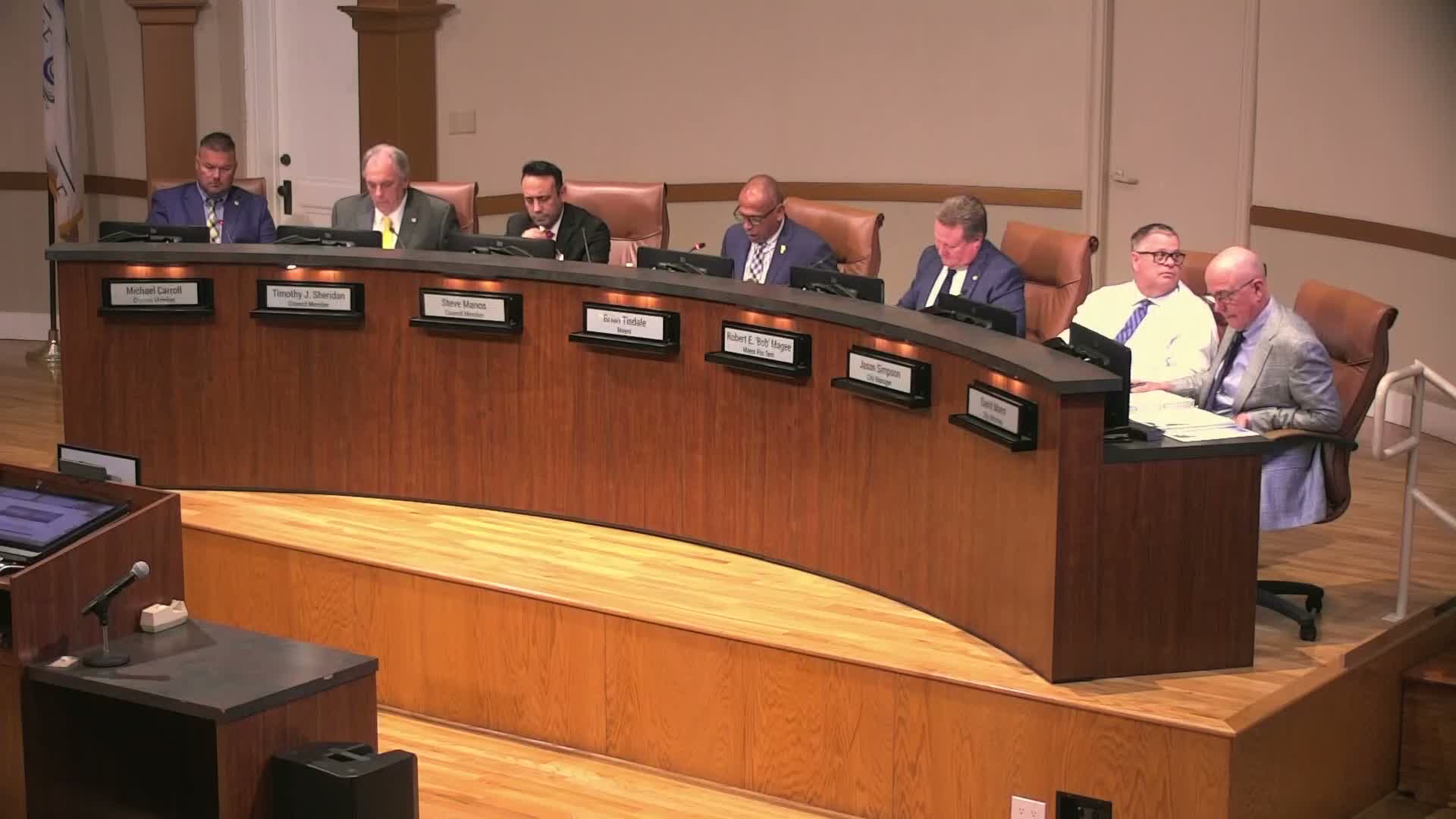
Lake Elsinore council approves Rome Hill zone change after environmental dispute; one member recuses
Summary
After public comment from environmental advocates and residents, the City Council approved a zone change allowing two commercial/manufacturing buildings at the Rome Hill site, voting 4-0 with Councilman Michael Carroll recused; opponents urged a full EIR citing biological and air‑quality concerns.
The Lake Elsinore City Council voted to approve a zone change and related resolutions for the Rome Hill Commercial Project, allowing two commercial/manufacturing buildings totaling 92,760 square feet on a 6.77‑acre site and accompanying site improvements.
The public hearing opened with staff describing the proposals: two buildings, 173 parking spaces, a request to transfer 144 unused residential units to the city’s unit bank, and a Mitigated Negative Declaration prepared for the project. Chase Preciado, representing the environmental group SAFER, urged the council to withhold approval and require an Environmental Impact Report. Preciado said SAFER’s field biologists observed 11 special‑status species on the site and that a screening‑level health risk assessment showed diesel particulate matter exposures creating an excess cancer risk “more than six times” the South Coast Air Quality Management District threshold.
Kelly Black, counsel for the applicant, disputed SAFER’s evidence, telling the council SAFER’s experts did not walk the site and describing the submitted photos and letters as lacking contextual, on‑site verification. Black said the project is a commercial manufacturing operation (not a logistics warehouse), that it supplies building materials rather than hazardous chemicals, and that the relocating company would bring roughly $200,000 per year in estimated sales tax revenue.
Council members questioned staff and the applicant about traffic and biological impacts. One council member cited staff estimates of up to about 200 additional truck trips on nearby roads as a factor to weigh; other council members noted that a change to commercial manufacturing could produce fewer daily vehicle trips than high‑density residential development that could otherwise occur under existing zoning.
Following discussion, Councilman Sheridan moved to adopt six resolutions and an ordinance approving the zone change from Commercial Park and High‑Density Residential to Commercial Manufacturing for APN 371‑15‑0‑017; Mayor Pro Tem McGee seconded. The motion passed 4‑0. Councilman Michael Carroll recused himself from this item because of a prior relationship with the applicant, as disclosed on the record.
What happens next: The council’s action authorizes the change in zoning and related approvals described in the staff report; project conditions and permit compliance remain subject to the mitigation and monitoring requirements included in the council’s resolutions and the staff report.
Votes and procedural notes: The planning commission had recommended approval by a 4‑0 vote. The council’s final tally on the zone change was recorded as 4‑0 with one recusal.