Maryland House Rejects Floor Amendment to Apply Legislative Redistricting Standards to Congressional Maps
Loading...
Summary
Delegates debated whether Article 3, Section 4 standards for legislative districts should also govern congressional lines; proponents called the proposed change a fix for partisan gerrymanders while opponents argued the 1972 ballot and precedent exclude Congress. A roll call produced 39 negative votes; a separate desk amendment was laid over for one day.
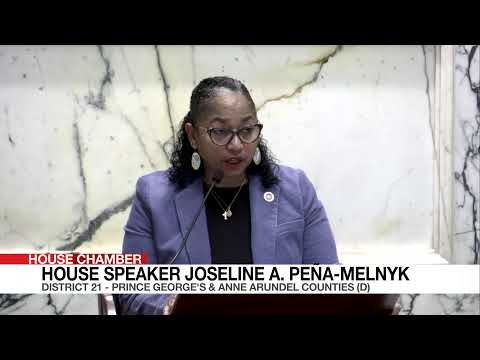
ANNAPOLIS — The Maryland House of Delegates on Jan. 28 debated a floor amendment to House Bill 488 that would explicitly apply the state's legislative redistricting standards — including compactness and respect for municipal and county boundaries — to congressional districts.
The amendment's proponent argued the change would prevent what they described as “extreme partisan gerrymandering” and would align congressional-district rules with those the General Assembly already follows for legislative districts. “If you vote for the amendment, you fix that,” the proponent said. “If you don't, tell your constituents rules don't matter.”
Supporters repeatedly cited a 2019 trial-court decision by Judge Lynn Battaglia and the role of prior litigation and the attorney general at that time, saying judicial findings showed the state needed clearer statutory language to prevent partisan map‑drawing. One supporter said the amendment is designed to “cure” the problems identified in past suits and to make the same standards that apply to the General Assembly apply to congressional maps as well.
Opponents, led by the floor leader, urged delegates to reject the change. They argued the ballot question the state posed in 1972 did not include Congress and that the amendment would change settled expectations built into the state's constitutional and statutory framework. “We put it to the voters, and the voters said no,” the floor leader said, urging the body to respect the historic ballot process and established interpretations.
After extended debate that included examples of municipal splits and references to communities of interest across Baltimore City, Anne Arundel County and the Eastern Shore, the presiding officer called a roll-call vote on the amendment. The clerk announced, “There being 39 votes in the negative,” indicating substantial opposition on the floor. (The clerk’s announcement is recorded in the chamber transcript.)
Separately, members introduced a desk amendment that would strike the constitutional-amendment language pending with HB488 and substitute alternate language. A delegate invoked Rule 53 to request a one-day layover on that amendment, citing concerns about vote thresholds for constitutional changes and the governor’s role; the request received the required support and the desk amendment and HB488 were laid over for one day for further consideration.
The debate underscored the continuing tension in Maryland over how to translate compactness, contiguity and community-of-interest principles into enforceable rules for congressional lines, and whether such changes should be resolved in the legislature, through a statewide referendum, or by courts.
Procedural next steps: the laid-over desk amendment and HB488 will return to the floor the following day for continued consideration and any further amendments.
Sources: Floor debate and roll-call announcements, House floor transcript, Jan. 28, 2026.