Get Full Government Meeting Transcripts, Videos, & Alerts Forever!
Get email alerts on the Sober Living topic
No spam. Unsubscribe anytime.
Dozens of residents, operators urge Riverside council not to impose new limits on sober living homes
Summary
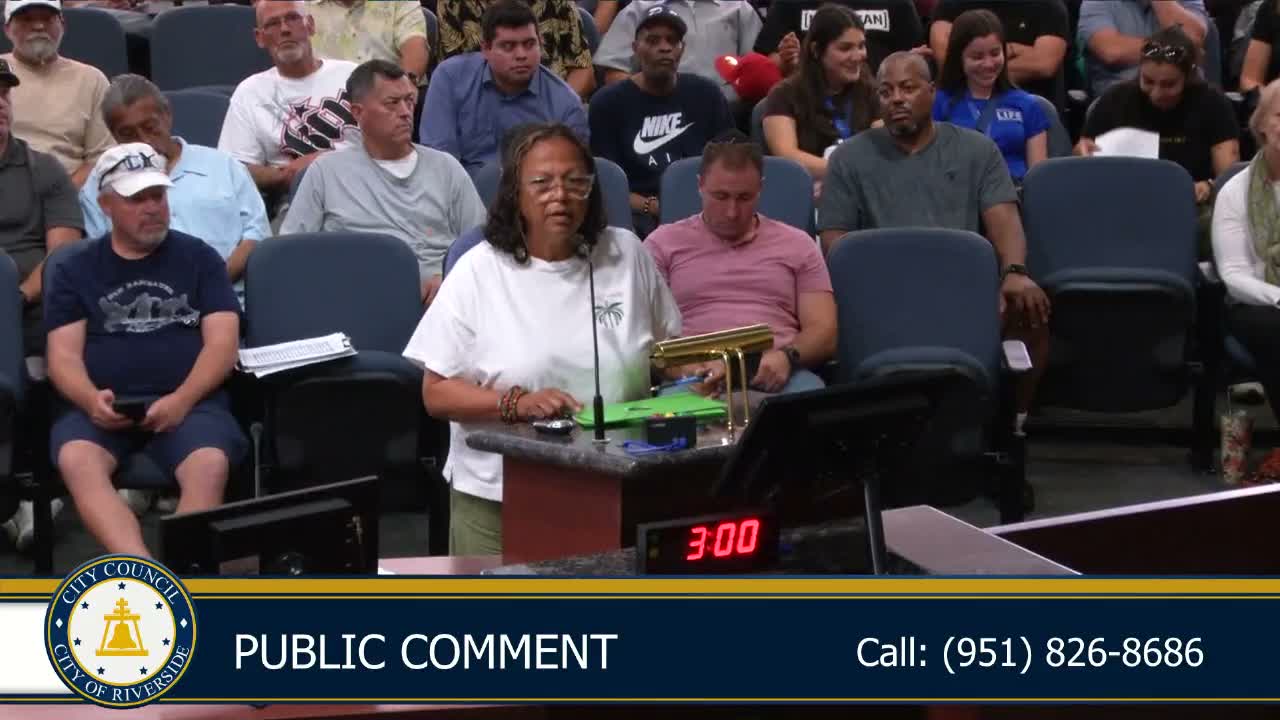
Dozens of residents, sober‑living operators and people in recovery told the City Council July 1 that proposed spacing and occupancy rules would shut down recovery homes, increase homelessness and likely violate state and federal housing protections.
Dozens of residents, people in recovery and sober‑living operators told the Riverside City Council on July 1 that proposed spacing and occupancy rules would threaten housing that they said is essential to recovery.
Speakers at a packed public‑comment period described sober‑living homes as "lifelines" and urged council members to halt plans modeled on other cities that impose strict spacing or occupancy caps. "Sober livings have provided services for people for decades based upon a long trajectory of success," said Vonia Quarles, a co‑founder and director of Starting Over Inc., who urged the council to preserve current rules.
Why it matters: Council members discussed the issue earlier in committee, and staff flagged three regulatory options — do nothing, adopt spacing rules (6/50/1,000‑foot options), or follow a stricter 'Costa Mesa' model combining spacing and occupancy limits. Operators and residents said limits such as a six‑person cap or broad spacing requirements would make existing homes economically unsustainable, force closures, and push vulnerable people back onto the street.
What was said: Several operators and residents gave personal testimony and cited interactions with state agencies. Vincent Thayer, who operates certified homes under the name Nellie's Way, told the council staff that the California Department of Housing and Community Development (HCD) had opened a formal inquiry after complaint filings and that state and federal fair‑housing protections could make some local restrictions legally risky. ‘‘HCD also confirmed they're unaware of the restrictive ordinances passed in Fountain Valley and Mission Viejo. Now they do because of us,’’ Thayer said during public comment.
Other speakers described the human consequences. Trishawn Martinez, a caller, said her son had remained sober after entering Nellie's Way and warned that a six‑person cap would remove affordable options: "This will force people back into homelessness," she said.
What council did: Testimony closed after a prolonged public‑comment period; no ordinance vote occurred at the July 1 meeting. Council members thanked speakers and noted the legal complexities raised by HCD and fair‑housing law. Council discussion indicated staff will continue to work on the issue and that it remains under consideration.
Context and next steps: Staff earlier presented regulatory options at a Safety, Wellness & Youth committee meeting on June 18. Several speakers urged the council to pursue alternatives — such as technical assistance, funding, or licensing partnerships — rather than adopting prescriptive zoning rules. The council has not scheduled a final vote on an ordinance; staff will return with recommendations and any legal analyses prompted by the HCD inquiry.
Attribution: Quotes in this article are from public commenters recorded in the July 1 Riverside City Council meeting public comment period.