Get Full Government Meeting Transcripts, Videos, & Alerts Forever!
Get email alerts on the Utilities topic
No spam. Unsubscribe anytime.
Sewer fund workshop flags 2027 revenue gap; city outlines rate-scenarios and asset needs
Summary
Staff told the council that the sewer enterprise fund faces rising O&M and capital costs and that, under current projections, the fund may be unable to finance capital improvements or meet reserve policy by 2027; the presentation showed scenarios including a five-year 6% rate plan to maintain covenant coverage.
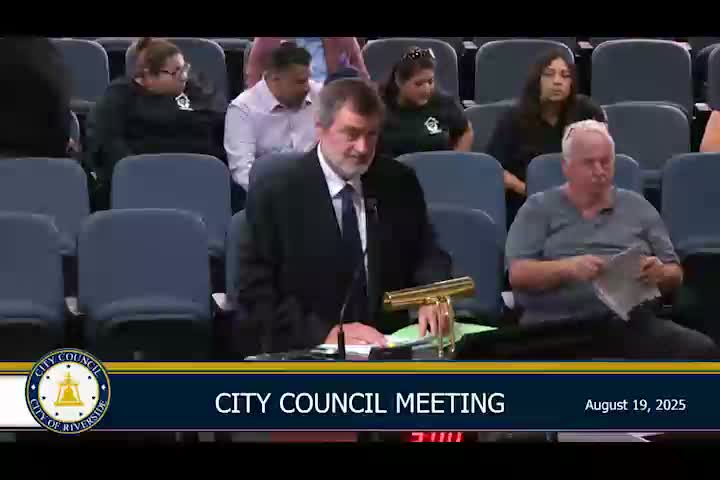
At an Aug. 19 workshop, Public Works staff presented a financial overview of Riverside's sewer enterprise fund and wastewater system, warning council that ongoing inflation in chemicals, biosolids disposal and construction has strained operating budgets and deferred capital needs.
Ed Philadelphia, presenting for the Department of Public Works, said the sewer system serves roughly 100,000 customers in the city and three community service districts and that treatment and collection assets are aging: an average system age of approximately 50 years with many segments more than 50 years old and some pipes more than 70 years old. Philadelphia noted that the treatment plant came partially online with recent upgrades but that 75% of membrane cassettes will be out of warranty by 2027 and several headworks facilities have reached the end of useful life.
Staff explained regulatory changes including expected PFAS monitoring and additional biosolids monitoring in an anticipated new discharge permit, which would require increased monitoring and potential investments. The presentation said the city produces about 4.17 million gallons of recycled water and generates roughly 9.5 million kWh of energy from biogas, covering about 40% of plant power needs.
On finances, staff reported that since the last rate increase (2017) the fund has absorbed about 29.1% of operation and maintenance cost increases; chemicals have risen by roughly 135%, biosolids costs by 56% and construction costs by about 57% in recent years. Staff presented modeled rate scenarios, including a five-year 6% increase starting Jan. 1, 2027, that would preserve bond covenants and reserve policy under current assumptions. A lower 3.5% scenario would put reserves below policy targets and require further adjustments.
Councilmembers thanked staff for the detailed briefing and urged public outreach explaining the need for any future rate changes. City Manager Mike Futrell noted there is no rate increase this year and praised staff stewardship; staff emphasized that 2027 is shaping up as a critical year for fund decisions unless new revenues or cost changes occur.
Next steps: staff requested the council receive the report and provide input. Council did not take a rate vote at the workshop; any rate ordinance or formal action would return to council with full financial analyses and public hearings.