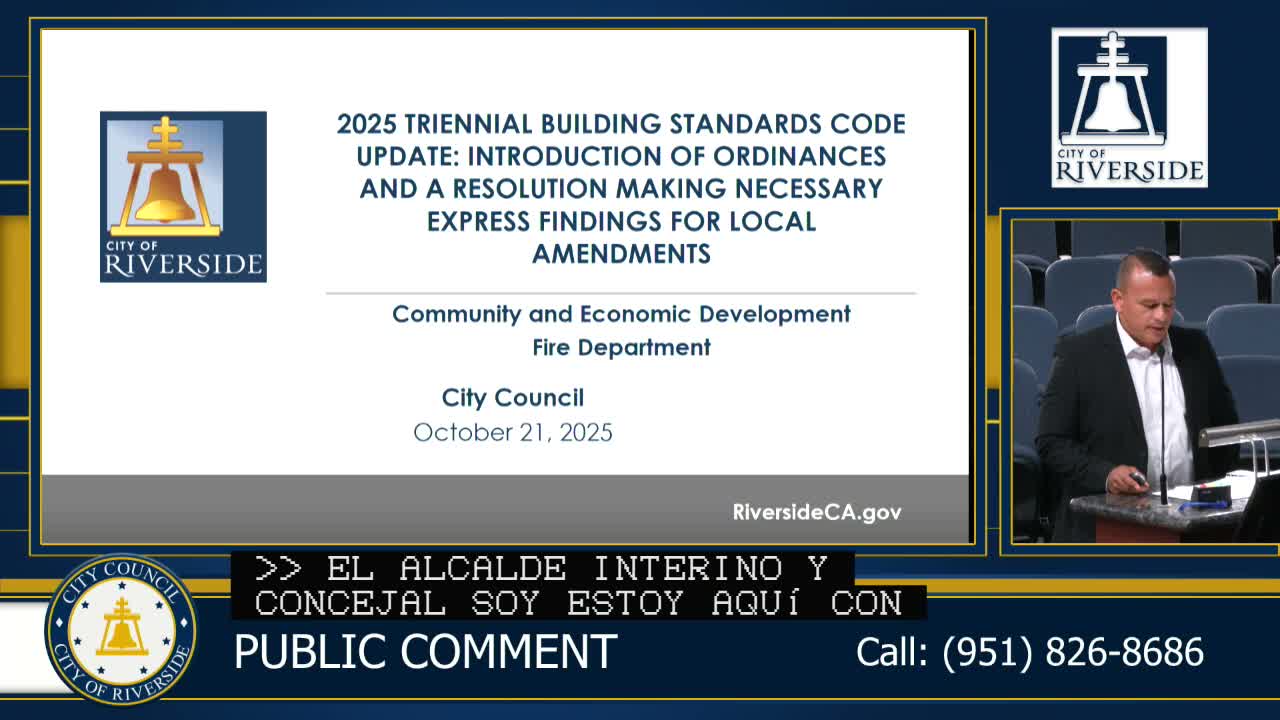
Riverside moves forward on building-code and zoning updates to reflect new state laws

City of Riverside City Council · October 21, 2025

Loading...

AI-Generated Content: All content on this page was generated by AI to highlight key points from the meeting. For complete details and context, we recommend watching the full video. so we can fix them.

Summary

Council heard presentations and approved motions to align Riverside's building and zoning codes with recent California law changes (including Title 24 updates and SB 9-related amendments) and approved a master-fee update to speed permitting.

City planning and code staff presented a set of ordinance and code updates at the Oct. 20 council meeting meant to align Riverside regulations with recent California legislation and improve permitting timelines.

Staff described a two-step adoption process for local amendments to the California Building Code (Title 24), including changes to Chapter 16.4 (building code updates) and Chapter 1.17 (alarm systems) to strengthen inspection and safety authorities. The presentation noted the need to adopt local modifications where climate, topography or local safety conditions warrant.

In a separate planning presentation staff explained proposed zoning code amendments to reflect state legislative changes (SB 9, SB 450, AB 4) that affect lot-splitting, accessory dwelling/unit rules and design standards. Staff noted draft changes to tree-permit requirements, parking and temporary-vendor rules, and clarified definitions for certain development standards.

Council also considered a resolution updating the master fee schedule and a program to accelerate building permits and inspections, with specific recovery costs and fee examples cited in the staff presentation (application fee example $2,500; renewal fee example $700; recovery/cost-recovery estimate example $300). Staff said the updates would not change tax rates but would cover permitting costs and reduce permit turnaround times for small-business owners and homeowners.

Council moved and approved the ordinance introductions and the fee-schedule resolution; the transcript records the motions as unanimous. Staff will return for formal adoption at the next hearing or public hearing step where required by law.

What happens next: staff will prepare final ordinance language and return for required public hearings and second readings where necessary, and the city will implement the permitting process improvements once fees and administrative steps are finalized.