Get Full Government Meeting Transcripts, Videos, & Alerts Forever!
Get email alerts on the Charter Revision topic
No spam. Unsubscribe anytime.
Riverside council debates charter and meeting-rule changes; agrees to pilot timing adjustments
Summary
Council members and public speakers debated proposed charter and rules changes (public-comment sequencing, meeting times, consent calendar procedures and member speaking limits). Council approved a motion to pilot several adjustments, with a six-month review.
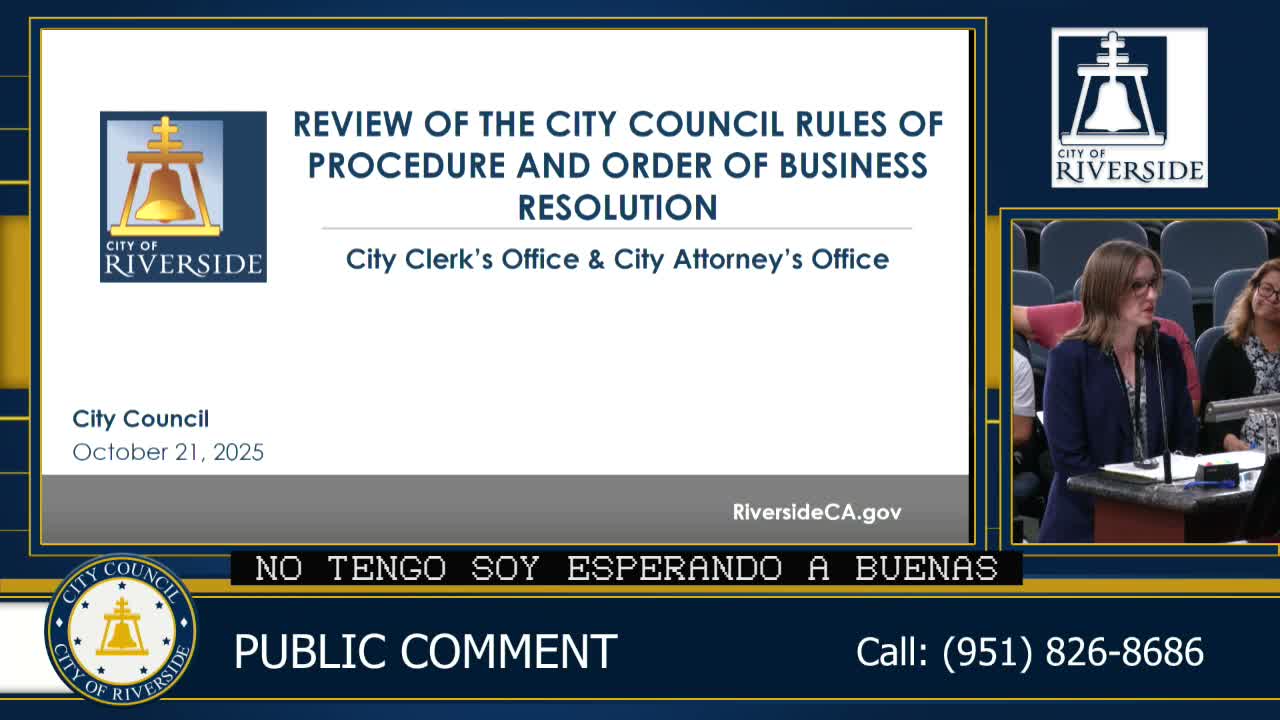
The Riverside City Council spent a substantial portion of its Oct. 20 meeting debating recommendations from a Charter/Rules of Procedure review committee that would change how meetings are scheduled and how public comment is handled.
Luzán Salera (introducing the committee's redline) described a multi-point package that included removing certain summer meeting dates, clarifying agenda sequence and public-comment rules, requiring a brief explanation when a member abstains to remove an item from consent, and proposing time limits on member remarks (initially 15 minutes for an opening comment, with subsequent five-minute opportunities).
The ensuing debate involved multiple councilmembers, callers and public speakers. Callers and commenters consistently warned against limiting public comment. Several said shorter telephone/comment windows and afternoon-only meetings would mute working residents; others supported clearer structure and occasional evening sessions to improve attendance. Jason Hunter, Kid Nelson and Melissa Mackys called for more evening meetings and opposed arbitrary reductions in public time; Hunter suggested regular monthly committee sessions so community voices could be heard.
Council members discussed balancing efficiency with access. One councilmember proposed a compromise pilot: shorten the opening member time to 10 minutes with subsequent five-minute opportunities, increase evening sessions in key months, and revisit the changes after six months. Council adopted the motion to move the package forward with amendments and a six-month review; the transcript records the motion as approved unanimously. Specific roll-call counts were not recorded in the transcript.
What happens next: staff will refine the language, incorporate public feedback and return to the council for a formal ordinance or resolution following the pilot period. The discussion emphasized transparency—members repeatedly asked for clear language to avoid unintentionally silencing public input.