Get Full Government Meeting Transcripts, Videos, & Alerts Forever!
DDS director outlines IT modernization, rate reform and an expanded budget amid implementation challenges
Summary
Department of Developmental Services Director Pete Cervenka told the commission DDS has implemented a standardized IPP and a multiyear $3.5 billion provider/wage investment, and outlined plans for IT modernization and a provider directory while warning of workforce and federal funding uncertainties.
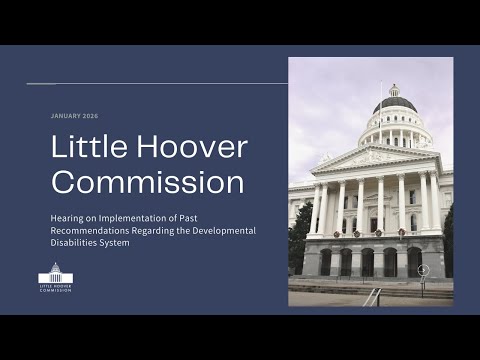
Pete Cervenka, director of the Department of Developmental Services, told the Little Hoover Commission the department has implemented a series of steps since the commission'9s 2023 report to standardize services and increase transparency.
Cervenka said a statewide individualized program plan (IPP) template became available in January 2025 and that the department issued updated regional center performance measures in 2025 that will measure IPP experiences. He also described a…
Already have an account? Log in
Subscribe to keep reading
Unlock the rest of this article — and every article on Citizen Portal.
- Unlimited articles
- AI-powered breakdowns of topics, speakers, decisions, and budgets
- Instant alerts when your location has a new meeting
- Follow topics and more locations
- 1,000 AI Insights / month, plus AI Chat