Get Full Government Meeting Transcripts, Videos, & Alerts Forever!
Get email alerts on the Animal Services topic
No spam. Unsubscribe anytime.
Riverside council approves three-year animal services contract and community program, 5–2
Summary
After presentations and public comment on microchip-scanning and community spay/neuter events, the council approved a three‑year contract with County animal services and supplemental appropriations to fund community programming, passing the motion 5–2.
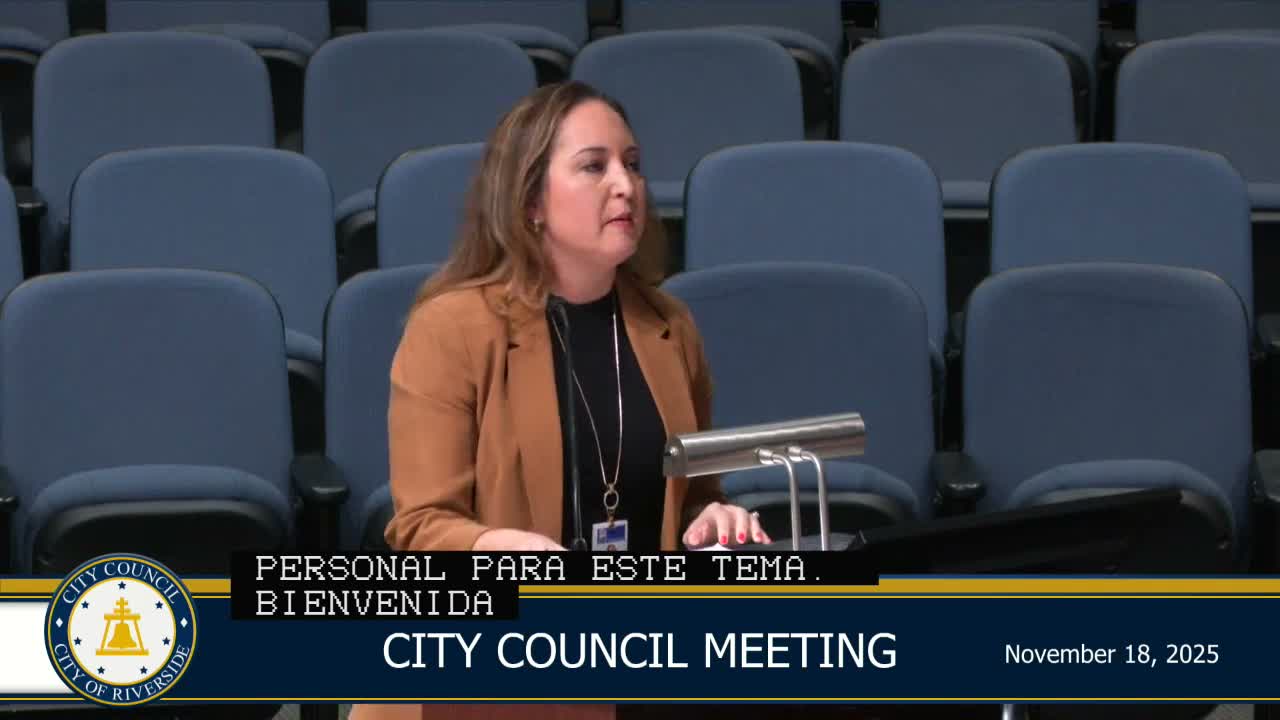
Diana Pelado, presenting staff for the animal services item, summarized recent animal intake and euthanasia statistics and described a recommended three-year contract with the County for animal services. Pelado outlined a hybrid cost structure, estimated multi‑year costs, and requested a supplemental appropriation to support community programs, including spay/neuter and adoption events.
Members of the public and animal‑welfare partners described pilot programs aimed at reducing shelter intake, including a microchip‑scanner pilot and free adoption events. Keri Richway said the scanner kiosks and community events can quickly reunite pets and reduce shelter stays: “Este programa… es un bajo costo y alto impacto de solución y salva vidas de animales.”
Councilmembers questioned contract terms and cost allocation, asking whether the County would charge for additional hours, how performance reports would be handled, and whether constructing a local shelter (cited cost estimate ~ $65,000,000 in discussion) would be more appropriate long term. Staff noted comparative cities’ approaches and presented an option‑based analysis (option A vs. option B) for community programming.
After extended public comment and council debate about costs, contract management, and program design, the council voted to approve the three‑year County contract and the requested appropriations. The motion passed with five votes in favor and two opposed.
Next steps: staff to finalize contract documents, implement the community program elements (including pilot microchip scanning and targeted spay/neuter events), and return with performance reports and budget updates.