Get Full Government Meeting Transcripts, Videos, & Alerts Forever!
Get email alerts on the Government Ethics topic
No spam. Unsubscribe anytime.
Council approves revisions to city code of ethics; digital-communications language deferred for further review
Summary
The City Council adopted Governmental Processes Committee recommendations to the code of ethics—adding whistleblower protections, widening complainant eligibility, and revising preconference evidence language—while referring proposed digital-communications provisions to the Board of Ethics and city attorney for more study amid First Amendment concerns.
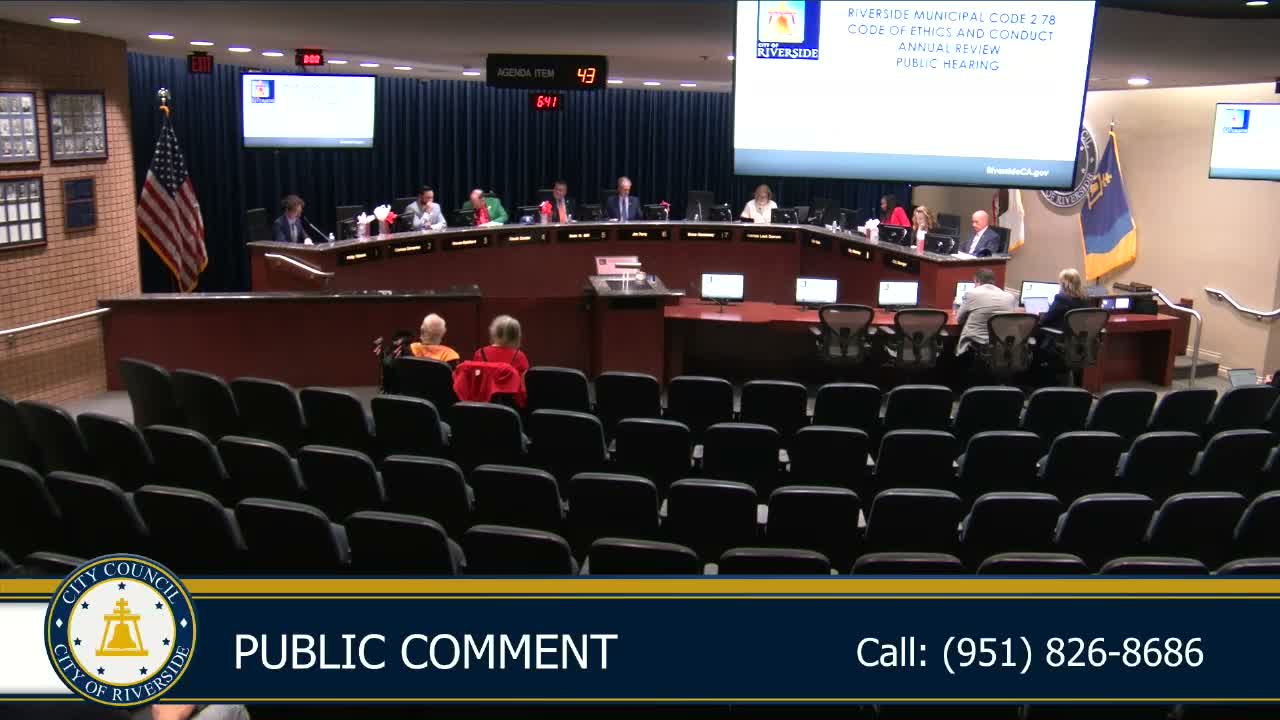
Riverside's City Council approved a set of revisions to the municipal code of ethics advanced by the Governmental Processes Committee, including expanded eligibility to file complaints, added whistleblower-protection language, and edits to preconference procedures that replace presumptive factual language with references to allegations in complaints.
Council member Falcone, who chaired the committee, outlined the package and said the changes seek to improve clarity and fairness in the ethics-complaint process. Among the updates is language to ensure that complaintants are covered by whistleblower protections and that the city will not tolerate retaliation for good-faith reports. The package also inserts wording that evidence at the preconference stage should be referenced as "alleged by the complaint" rather than treated as proven facts.
The meeting included robust public comment and ethics-board input. Dr. Danielle Kilchenstein, a newly appointed Board of Ethics member speaking as a resident, urged caution on several items: she recommended reconsidering a one-year statute of limitations (arguing it can be too short for complainants to obtain records) and warned that new preconference language requiring equal weight of all evidence could turn preliminary screening into a burdensome, quasi-adjudicative process that reduces accessibility.
Multiple callers and council members urged more training for volunteer board members and discussed whether placing the Board of Ethics under an inspector-general office would improve independence. Council members debated balancing the need to prevent frivolous or weaponized complaints with making the ethics process accessible. Because the digital-communications provisions implicate First Amendment concerns, the council agreed to refer those sections back to the Board of Ethics and the Governmental Processes Committee for further work and for the city attorney to draft implementing ordinance language.
The council voted unanimously to adopt the recommended revisions, with the digital-communications text reserved for additional legal review and committee review before being reintroduced.