
Board reviews executive limitations; debates financial projections, purchasing limits, technology and safety
Get AI-powered insights, summaries, and transcripts
Subscribe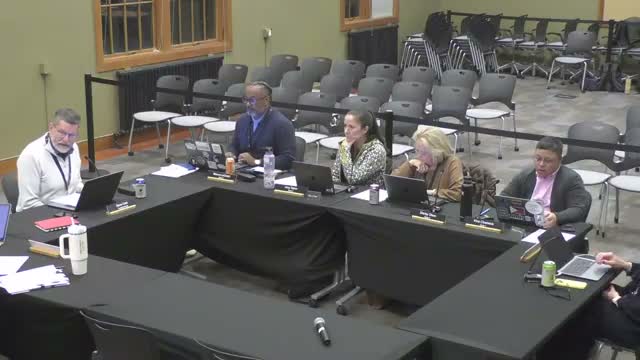
Summary
At its Jan. 27 work session the Bend‑LaPine Board began a line‑by‑line review of executive limitations 4.3–4.9, debating multi‑year budget projections, superintendent purchasing limits, performance‑based budgeting, inclusive facility standards, transportation and fleet policy, nutrition services, acceptable‑use and cybersecurity for district devices, and safety/law‑enforcement protocols.
The Bend‑LaPine Administrative SD 1 Board of Directors devoted an extended work session Jan. 27 to reviewing executive limitations (EL 4.3 through 4.9), focusing on where the board wants to set boundaries for the superintendent’s administrative authority.
Financial planning (EL 4.3) drew sustained debate. Director Jen Lynch proposed that the budget documents include forward‑looking revenue and expenditure projections — she suggested three years — and recommended an explicit superintendent purchasing limit tied to district policy so large purchases require board approval. Lynch said, “the superintendent shall not fail to continuously monitor and report on the educational outcomes of expenditures,” urging outcomes be tied to spending. Administration agreed in principle to forward projections tied to the current biennium and recommended separate, public‑facing reporting, noting existing CFO and staff purchasing authorities (the CFO’s $100,000 limit was cited) and facility change‑order thresholds that trigger board notification.
Board members discussed practical reporting thresholds (examples cited: $300,000 change‑order notice in facilities; peer districts often show superintendent thresholds near $500,000) and asked staff to draft language that would balance transparency with operational flexibility. Dr. Steven Cook said the district is building systems required for performance‑based budgeting and acknowledged the work would take time and staffing.
Facilities language in EL 4.4 prompted edits to remove double negatives and to add accessibility and inclusivity language. Directors recommended that restroom upgrades and inclusive design be captured either in building standards or administrative regulations (ARs) to keep ELs high‑level but reflective of district values.
On transportation and fleet (EL 4.5) directors questioned whether tying vehicle policy too tightly to a sustainability plan might limit operational flexibility; the superintendent said the district already operates one electric bus among a mixed fleet and seeks a replacement plan for aging vehicles. The board discussed routing choices (so‑called ‘‘mitt’’ routes) and asked that replacement plans and supporting route technology be reflected in the documents.
Nutrition services (EL 4.6) was rewritten for clarity. Directors asked that the EL language correctly reference the National School Lunch Program and School Breakfast Program and address how federal funding rules limit or permit menu changes. The superintendent said the program represents roughly $6,000,000 annually and that the district does local sourcing and other sustainability initiatives; he agreed to rewrite the sentence for clarity and retain sustainability elements in the district plan.
Technology (EL 4.7) drew the most extensive remarks. Directors urged changing the term “implementation” to “use,” aligning technology with pediatric mental‑health guidance, and tightening acceptable‑use policies. One director reported seeing screenshots of pornographic images on district iPads and called for stricter operationalization of Jamf (the district’s device‑management tool) and staff training. Administration said cybersecurity training and management tools exist but acknowledged inconsistent operational implementation across classrooms and schools and noted that district‑wide fixes will take time and resources.
On communications (EL 4.8) directors asked for stronger commitments to regular, two‑way engagement with staff, students, families and the broader community and proposed clearer timelines and accessible formats for district communications.
Safety language (EL 4.9) prompted discussion over wording (“safety” vs. “security”) and how to codify law‑enforcement interactions. Directors referenced KNAR and Oregon statute protections for students, discussed that students generally are not released to law enforcement without proper legal authority (warrants, court orders, arrest or parent/guardian permission), and agreed ARs and training manuals should carry operational details such as warrant handling and drills.
Administration agreed to draft revised EL language for board review and return it with the March board packet; the board discussed whether draft language should be released for public comment before adoption.