Get Full Government Meeting Transcripts, Videos, & Alerts Forever!
Get email alerts on the Short Term Rental Ordinance topic
No spam. Unsubscribe anytime.
Fayetteville committee backs tighter occupancy limits, approves tougher penalties for repeat short‑term rental violators
Summary
A Fayetteville committee voted to advance revisions that remove a ‘plus two’ per‑bedroom occupancy allowance and approved stepped penalties — including temporary water‑service disconnection and multi‑month licensing ineligibility for repeat unlicensed operators. Staff will refine language before council review.
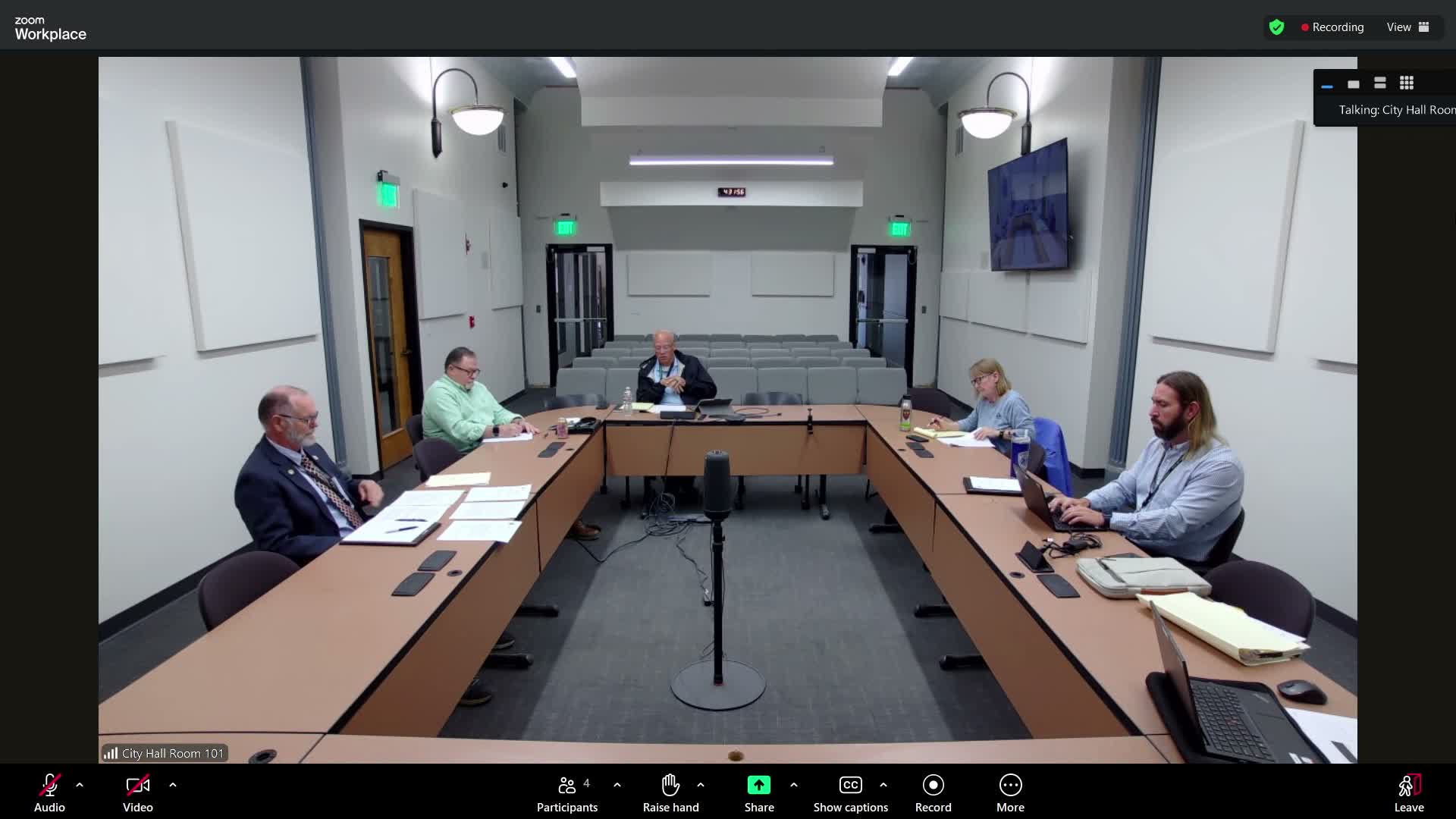
A Fayetteville committee voted Wednesday to send an ordinance revision to the full City Council that would tighten how short‑term rental occupancy is calculated and approved stepped penalties for repeat violators.
The committee’s staff recommendation, presented by Jonathan, would remove the existing “plus two” allowance from the city’s STR occupancy formula so limits are based strictly on beds per bedroom. "So ultimately, what staff is recommending is to strike the plus 2 allowance," Jonathan said, explaining the change is meant to align STR occupancy with conventional housing and reduce legal exposure.
Development Services Director supported the change and urged a phased implementation to avoid breaching valid, enforceable guest contracts. "I’ve been very generous because we do not want to breach that contract," the director said, and noted the draft includes a final cutoff date of Dec. 31, 2026 for extensions staff may grant.
Why it matters: Committee members said the change addresses safety and consistency concerns. The director warned non‑bedroom sleeping arrangements can lack required egress and other safety features, and members said the revision reduces a disparity between how permanent housing and short‑term rentals are treated.
The committee also approved new enforcement measures for unlicensed or repeatedly noncompliant short‑term rentals. Staff proposed a graduated penalty schedule that can begin with a notice and, for continued violations, lead to water service being shut off as an administrative enforcement tool. Jonathan outlined the sequence: an initial month‑long service termination for persistent noncompliance, escalating by additional months for subsequent violations and, after repeated violations, removal of eligibility for a Type 2 STR license or placement on the wait list.
Members debated whether penalties should be tied to the property or to the operator and how long a licensing ineligibility period should last. Several members recommended defining a fixed window; suggestions ranged from one to two years. The committee generally agreed to track violations by property address while allowing staff discretion to consider title changes or other evidence when a new owner appears.
Votes at a glance: The committee took voice votes to (1) forward the occupancy/ordinance revision to the City Council and (2) recommend approval of the penalty provisions (sections 3 and 4) and to separate licensing ineligibility into a distinct subsection. Both measures passed on voice votes; the record shows motions were moved and seconded and approved by unanimous voice votes at the meeting.
Staff data: Jonathan told the committee the city currently has 597 STR units operating (132 Type 1 owner‑occupied type, 465 Type 2 non‑owner occupied) and 55 properties on the wait list. He said the city’s compliance monitoring (Host Compliance and staff enforcement) identified 973 listings and about 581 distinct units on the tracking platform; after stronger enforcement the number of units operating declined roughly 20% over two years.
What’s next: Jonathan and Kit will clean up ordinance language and circulate a revised draft by email; the committee will reconvene for a follow‑up session to test density scenarios and finalize language before sending a final package to council. Theresa Cher agreed to send parameters for two additional sample areas to staff for analysis before the next meeting.
Quotes in context are from committee proceedings and staff presentations; votes were taken by voice and recorded as ayes without roll‑call tallies. The committee meeting adjourned after members agreed to meet again to finalize density and occupancy language.