
Exeter hearing affirms eligibility for Farm Overlay District amid resident fears about possible slaughterhouse
Get AI-powered insights, summaries, and transcripts
Subscribe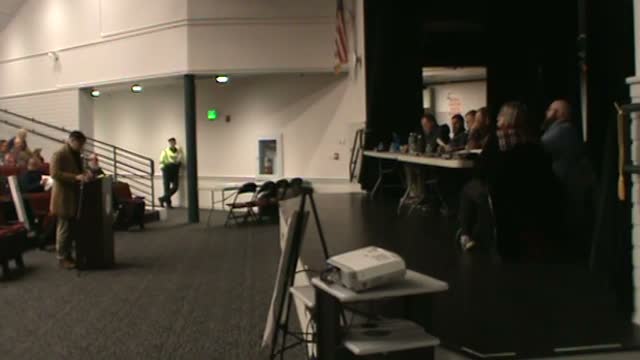
Summary
The town council heard testimony that a farm qualifies for Exeter's Farm Overlay District and that the planning board unanimously endorsed eligibility; residents pushed back, saying the overlay could be used to allow a slaughterhouse and raised water, odor and notice concerns.
Exeter — Town officials and an applicant argued Tuesday that a parcel meets the eligibility rules for Exeter’s Farm Overlay District, while dozens of residents said the same designation could be used later to permit a commercial slaughterhouse near homes.
Town planner (speaker 4) told the council the proposed designation is consistent with the town’s comprehensive plan and cited plan goals calling for the economic viability of farms. He said the planning board reviewed the petition on Aug. 12, 2025, and "unanimously" endorsed the finding that the application meets the ordinance’s eligibility criteria.
The hearing focused narrowly on eligibility, not on approval of a specific project, officials repeatedly said. The planner read sections of the ordinance and a September 16, 2025, memorandum that outline the application standards and described the overlay’s by‑right, limited and conditional uses — from farm stands and small farm stays to larger events that would require separate council approval.
But public comment was dominated by concerns that the overlay’s language could be used to permit intensive commercial uses. "If in fact it is a slaughterhouse, it brings up a lot," said Beth Brown (speaker 8), a nearby resident who said she had not received individualized mailed notice and worried about well contamination and truck traffic. Other speakers cited deed restrictions, watershed impacts on Sherman Brook and the Queen’s River, and asserted that the owner had filed state paperwork referencing slaughterhouse uses in 2024.
An extended commenter (speaker 11) read from a deed-of-development-rights and asserted that the owner received $3.5 million in development‑rights funds and that a slaughterhouse would violate conservation restrictions; the commenter warned of water pollution, increased disease risk and falling property values. The transcript records residents repeatedly asking whether the ordinance allows slaughterhouses and how future applications would be vetted.
Attorney Christopher Dovidio (speaker 5) described the ordinance’s tiered approach: some uses are as‑of‑right; others require planning-board review; the most intensive require both planning-board and council approval. He urged residents that technical claims (traffic, pollution) will need expert evidence during later review stages. Council officials responded that adoption of a townwide overlay is notified by newspaper and website, while properties within 1,000 feet of a proposed floating‑zone application receive mailed notice; some residents said that radius omitted many affected homes.
Applicant representative (speaker 6) emphasized the farm’s multigenerational history and said the overlay is intended to help farms remain financially viable. He and the planner stressed the current hearing addresses only whether the parcel meets eligibility rules; any specific development proposals would return for separate public review and required engineering and environmental reports.
Council records show the planning board had recommended the application as eligible; the transcript ends with the presiding official moving to close the public hearing. The record in this excerpt does not include the council’s final roll-call on the designation or any follow-up timeline for a council decision on specific permitted uses.
Next steps: the council was scheduled to consider the designation on the meeting agenda; any future application for an intensive use such as a slaughterhouse would require further planning‑board review, additional technical reports and, if applicable, town‑council approval.