Get Full Government Meeting Transcripts, Videos, & Alerts Forever!
Get email alerts on the Short Term Rentals topic
No spam. Unsubscribe anytime.
Fayetteville committee endorses permanent short‑term rental rules, lowers occupancy and adds density and penalty limits
Summary
The Fayetteville Ordinance Review Committee unanimously recommended forwarding a revised short‑term rental ordinance to City Council that removes sunset language, tightens occupancy rules to two people per bedroom, establishes a 500‑foot/4% density test and 100‑foot buffers, and adds escalating penalties and transition rules for existing reservations.
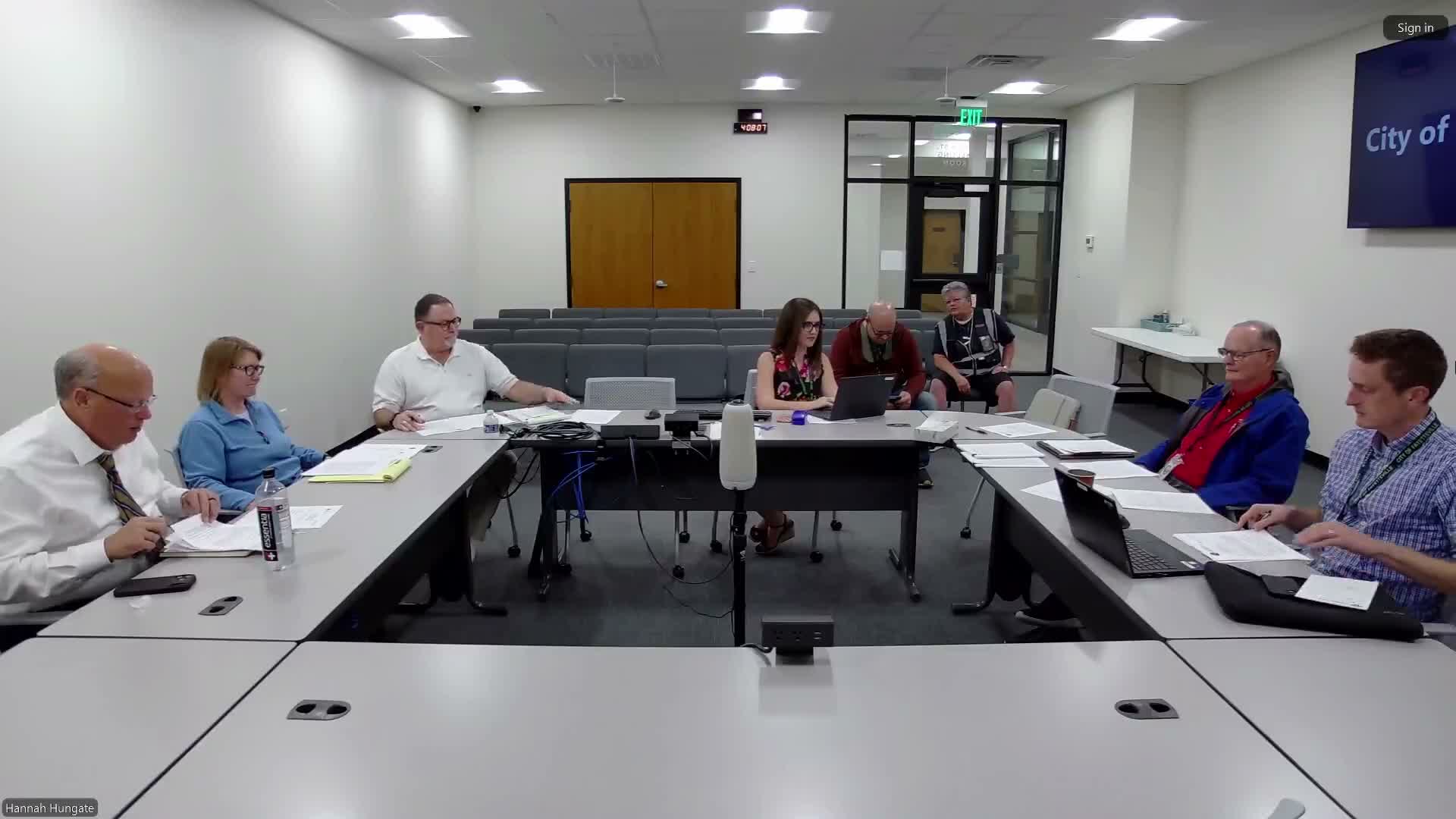
The Fayetteville Ordinance Review Committee on Nov. 19 voted to recommend that City Council adopt a rewritten short‑term rental ordinance that would make current rules permanent, reduce allowable occupancies and add new density and enforcement tools.
The committee endorsed a package of changes staff said were designed to reduce neighborhood impacts while preserving an avenue for short‑term rental business. Jonathan, the Development Services Director, described the centerpiece of the proposal as a two‑part density test for single‑family homes: a 500‑foot radius calculation that would permit up to 4% of units in that radius to be Type‑2 short‑term rentals, and a 100‑foot minimum separation that would prevent new Type‑2 licenses within 100 feet of an existing Type‑2 rental. "The way this metric works is it's measured 500 feet from the outside boundaries of a property, and only 4 percent of the units that are captured within that radius are allowed to be type 2 short term rentals," he said.
Staff also proposed aligning occupancy limits more closely with conventional housing standards by removing the previous "plus two" allowance and applying a two‑people‑per‑bedroom rule. "The short term rental ordinance was adopted with an allowance for 2 people per bedroom plus 2," Jonathan said; under the revision the additional "plus two" component would be removed.
On enforcement, the committee endorsed an escalating‑penalty framework. Currently, unlicensed operations receive a violation letter and may face suspension of city services for about a month. The revised language allows progressively longer terminations of city services—up to six months—for repeat noncompliance, and staff proposed that applicants with three or more violations within 12 months could be made ineligible for Type‑2 licensing for two years.
The draft also removes prior "editor's note" sunset language from zoning pages so short‑term rental references remain in place, and it replaces phrasing such as "residential dwelling unit" with "commercial dwelling unit" in several definitions to reduce ambiguity in enforcement. Counsel urged caution about guest‑record requests, citing California case law on privacy and standing; staff narrowed the permitted exceptions for records requests to reduce litigation risk.
The ordinance package contains transitional protections for existing reservations. Operators who can show a written contract in force before the ordinance's effective date may request continued occupancy; committee members debated and set a March 1 deadline for operators to submit proof to the Development Services Director. Committee members agreed staff should use email as the primary notification method and follow up as needed.
Committee members asked staff to include the spreadsheet and visual examples the committee used when the item comes before the full council so council members unfamiliar with the committee's work can see how staff calculated the 500‑foot/4% metric. Jonathan said a pilot GIS tool exists to run the metric for individual parcels, though public access to the tool has not been decided.
After discussion the committee moved, seconded and by voice recommended approval to the City Council; no opposition was recorded. Chair Scott Vernon asked staff to prepare a final clean copy and redline for the council agenda session, including the March 1 transitional deadline and references to both Type‑1 and Type‑2 short‑term rentals. "I will entertain a motion to ..." the chair said before the voice vote.
A brief public comment followed from Annette Mitchell of Parking Enclosure Solutions, who asked the committee to review a separate parking/booting ordinance that affects her business; the chair committed to follow up with the city's parking enforcement staff.
Next steps: staff will prepare a final clean copy and the redline version for the council agenda session and present the spreadsheet/visuals the committee used; the committee has recommended the ordinance be forwarded to City Council for consideration.