Get Full Government Meeting Transcripts, Videos, & Alerts Forever!
Get email alerts on the Forensic Audit topic
No spam. Unsubscribe anytime.
Forensic audit finds nearly $460,000 in questioned costs; board to submit report to HUD
Summary
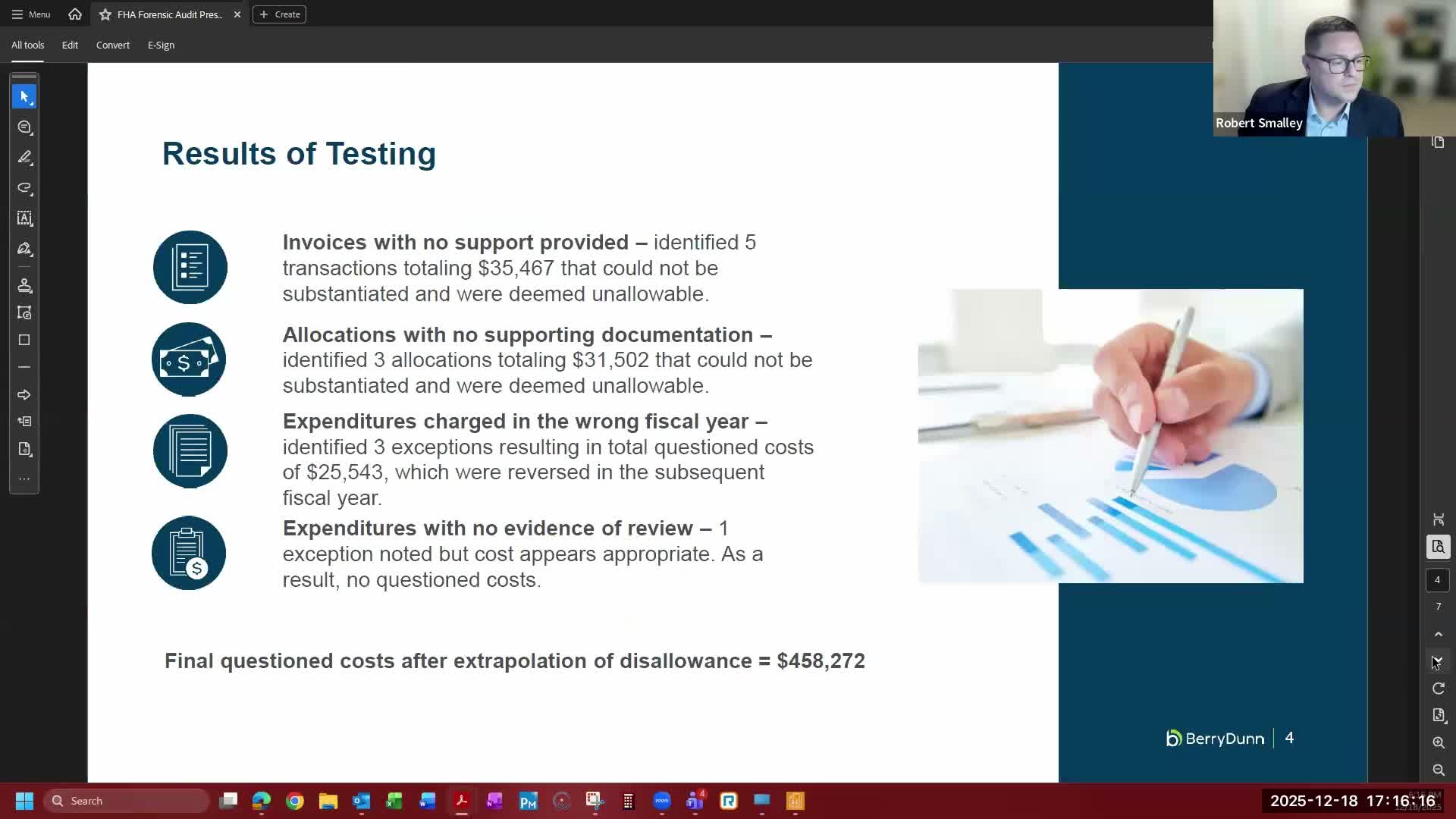
Auditors from Barry Dunn told the Fayetteville Housing Authority board their seven‑year forensic sample identified specific unsupported transactions and allocation errors that extrapolate to just under $460,000 in questioned costs; staff said the draft will be finalized and submitted to HUD after the board accepts the audit.
Auditors from Barry Dunn presented a forensic audit to the Fayetteville Housing Authority board, saying sample testing across seven years produced transaction-level exceptions that extrapolate to just under $460,000 in questioned costs.
The auditors told the board they tested 25 transactions per year (175 total). Jason Veil, who led the field work, said five selections lacked invoice support (about $35,000), three allocations had no supporting methodology (just under $32,000), three expenditures were booked in the wrong fiscal year (about $26,000) and one tested item showed no evidence of supervisory review. ‘‘When we extrapolated the deviation rate across the full population of expenses for the period under review, the final question costs came to just under $460,000,’’ Veil said.
The audit team provided two appendices: Appendix 1 reconstructs adjusted financial data schedules and FDS lines for HUD review; Appendix 2 contains recommended internal‑control improvements for the authority (staff said Appendix 2 is internal and will not be included with the HUD submission). Rob of Barry Dunn said the sampling and extrapolation approach produces a baseline that HUD will use to decide whether corrections or repayments are required.
Shonda and staff told the board the draft had not yet been submitted to HUD because the board must accept the audit and the associated resolution first. Shonda said the authority has already taken steps intended to reduce HUD’s concerns, including hiring a fee accountant, implementing IT and backup improvements and tightening allocation procedures. ‘‘We have already initiated repayment on some previously identified items and are prepared to work with HUD to reach an acceptable resolution,’’ she said.
Board members pressed auditors and staff about likely outcomes and next steps. Auditors and staff described a negotiation process with HUD that typically considers demonstrated corrective action and an authority’s documented plan to address control failures. The audit team recommended the authority continue improving cash‑disbursement, payroll and reporting controls and provided procedural templates in Appendix 2.
The board moved to accept the forensic audit report and to authorize staff to finalize paperwork for HUD after acceptance. HUD will make the ultimate determination of disallowed costs and any required corrective filings or repayments.
The authority’s next steps are to finalize the audit report as accepted by the board, submit required documentation to HUD, and continue implementing the internal control and bookkeeping changes described during the meeting. The board will revisit related financial and remediation items in subsequent meetings.