Fayetteville EAC to draft letter urging conservation-focused zoning for proposed Ramey Junior High site
Loading...
Summary
After extended discussion and public comment about slope, canopy and stormwater risks, the Environmental Action Committee agreed to draft a letter to the planning commission and city council recommending conservation-oriented (CCR) zoning or equivalent protections for the proposed Ramey Junior High site.
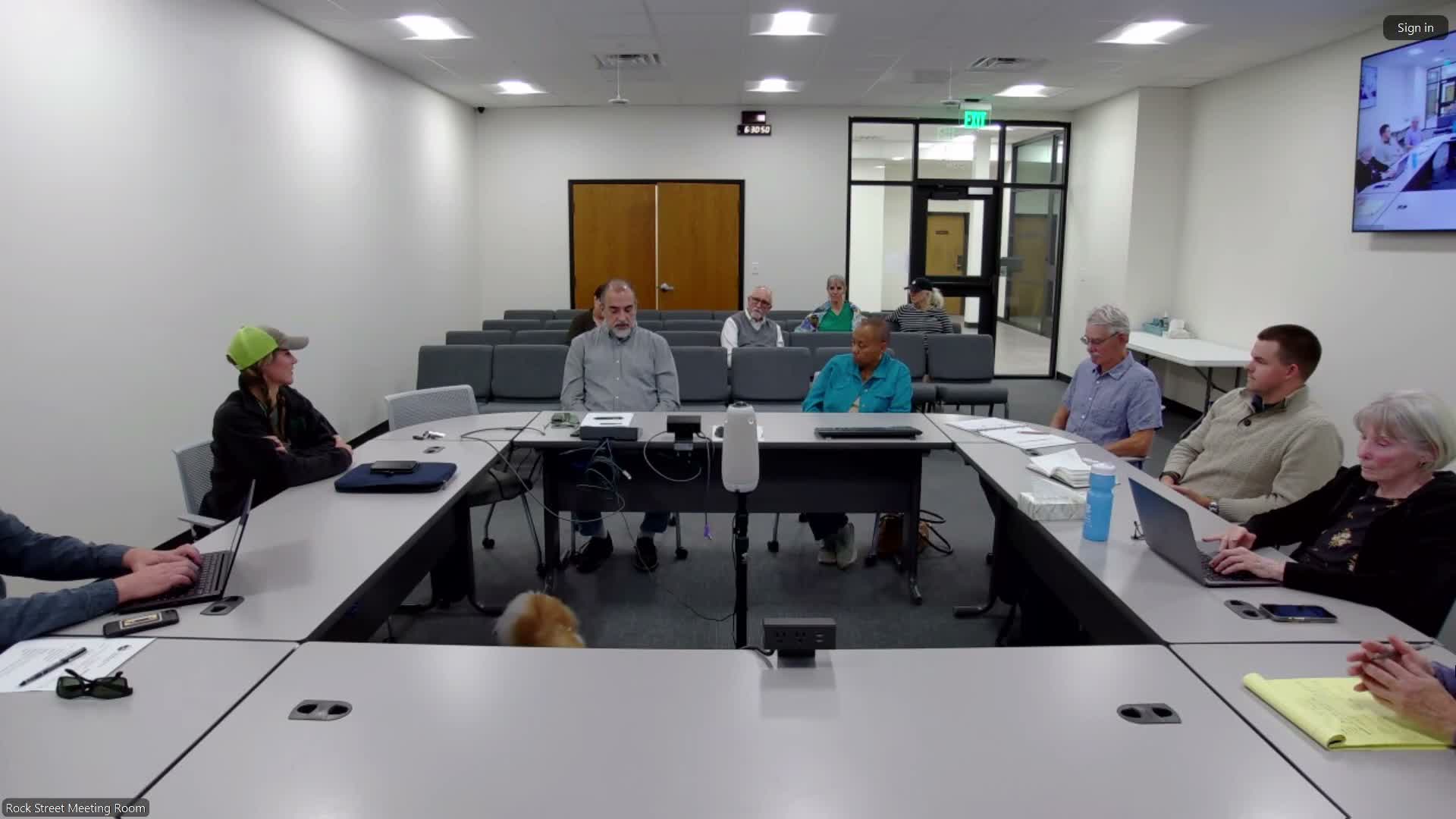
The Environmental Action Committee spent the second half of its Oct. 20 meeting discussing the proposed Ramey Junior High site, ultimately agreeing to draft and circulate a letter to the planning commission and city council that outlines the committee's environmental concerns and recommends conservation-focused zoning.
Committee members and public commenters raised multiple issues about the site's suitability for a school. Points the EAC identified for inclusion in a letter to decision-makers included slope and access concerns (committee members cited an average slope of about 18% and an "F" rating in the morning commute from the site's traffic study), stormwater and runoff risks for downhill properties and nearby businesses, loss of an intact urban forest and associated carbon sequestration, and a desire to preserve the area as part of the city's enduring green network. The city's zoning framework was discussed: the site is currently RSF-4 but would require a rezoning (p-1/institutional for schools) and the Hillside/Hilltop overlay would require a 25% canopy retention plus an extra 5% (30% total) because of the overlay.
Public commenters amplified environmental and community concerns. Dot Neely, speaking as a Ward 3 resident, warned of irreversible impacts, saying, "There is absolutely no excuse for cutting down our irreplaceable urban forest." Joanna Person Mitchner, representing the Interfaith Climate Alliance, described the choice as a "wicked socio-ecological problem" and urged careful consideration of equity and feeder-pattern implications.
Committee members discussed trade-offs, including the school district's arguments about feeder patterns and potential reductions in vehicle miles traveled, the cost and engineering challenges of the hilltop site (one commenter cited project cost estimates that rose from an earlier $80 million to as much as $137 million), and whether the EAC should propose alternatives or simply present environmental factors for planning and council consideration. Several members said the committee's role is to focus on environmental issues rather than affordability or zoning politics.
By the end of the meeting the committee had agreed to draft a concise letter to the planning commission (and copy the city council) listing environmental justifications and recommending the property be considered for conservation-oriented zoning (CCR) or similar protections. Vicky Spencer volunteered to produce an initial draft pulling from prior letters and recent discussion; the group aimed to circulate the draft for comment and to submit it to the planning commission several days before the rezoning hearing the following week.